Analysis: We may see pubs following airlines and hotels and trying to get customers to pay more for their pints at peak times.
By Cathrine Jansson-Boyd, Anglia Ruskin University
You may be used to paying more for a plane ticket or train journey at peak times, but what about in a pub? A major British hospitality company has announced a similar approach to the cost of beer consumption. Stonegate Group, which owns chains including Slug & Lettuce, has announced plans to increase drinks prices when its pubs are busiest.
In a difficult time for the hotel industry, some might consider this a gamble. There was certainly some sort of backlash on social media, with one person commenting: “If they continue down this path there won’t be a busy Stonegate pub.”
A Stonegate spokesperson told the Daily Telegraph that they would introduce the measure – known as “dynamic pricing” – to deal with rising staff costs and that customers would be kept informed of any price fluctuations.
We need your consent to load this rte-player contentWe use rte-player to manage additional content which may set cookies on your device and collect data about your activity. Please view their contact details and accept them to load the content.Manage preferences
Extract from RTÉ Radio 1’s Drivetime, the ever-increasing price of a pint in Ireland
The success of dynamic pricing – particularly common (but not popular) in the travel industry – depends on whether or not a business or event can secure demand from potential customers. If they have other options or feel that a price is simply too high, they can simply look elsewhere.
That said, research has shown (perhaps surprisingly) that consumers are generally quite forgiving of price increases if they consider the increase to be fair – perhaps if they know it is due to an increase in supply costs for example.
But if a price increase is specifically tied to a certain day or time of day, it’s quite possible that customers will perceive the increase as unfair. This could then lead to a negative perception of an establishment, and a loss of activity.
We need your consent to load this rte-player contentWe use rte-player to manage additional content which may set cookies on your device and collect data about your activity. Please view their contact details and accept them to load the content.Manage preferences
From the RTÉ archives, Tony Connelly reports for RTÉ News on a 5p increase in the price of a pint in 1998
Even before this change occurs, consumers tend to use their own benchmarks to judge the cost of a product. These may come from a menu or advertisement (external reference points) or be recalled from memory or personal knowledge of what other people have paid for (internal reference points).
For example, customers may know that they typically pay €5 or €6 for a pint in a particular pub, and they will use this price as a starting benchmark to determine what an acceptable price might be. They use their benchmarks to assess price fairness. For a price increase to be perceived as fair, the reference point must change according to the new cost.
This is not a simple task for a company. In the case of dynamic pricing in a pub, a potential problem is that the low price used during less busy periods may become the reference point for customers. The price at the maximum rate then turns out to be unfair.
Beer today, gone tomorrow?
So how can we overcome the problem of reference points so that the price is not perceived negatively? Research suggests that the way alternative prices are presented is critical to customer response.
For example, one study showed that golfers tended to think it was fair for a golf club to charge a regular price for “prime time” slots and offer a 20% discount for other times. But they thought it would be unfair for the course to charge 20% more for a preferred slot compared to the regular price at other times.
Departure times and costs may vary. Mikael Damkier/Shutterstock
The response to the two scenarios was different, even though the economic impact was the same. By changing the reference point, it is possible to change consumer preferences.
Pub owners looking to introduce dynamic pricing might get a better response if they tried to change drinkers’ perceptions in the same way. Presenting price changes as being cheaper during off-peak times is likely to be seen as a win from the drinkers’ perspective.
When information is presented in a way that makes it appear to be a gain for the customer, the evaluation is more positive than in a scenario where there is primarily a sense of loss or increased costs.
Of course, it’s also important not to lie to your customers. But research suggests that adjusting the presentation and framing of the new pricing structure could lead to a change that drinkers are more willing to accept.
Follow RTÉ Brainstorm on WhatsApp and Instagram for more stories and updates
Cathrine Jansson-Boyd is a Reader in Consumer Psychology at Anglia Ruskin University. This article was originally published by The Conversation.
The views expressed here are those of the author and do not represent or reflect the views of RTÉ.
The range of 20 products is designed to help meet daily nutritional needs
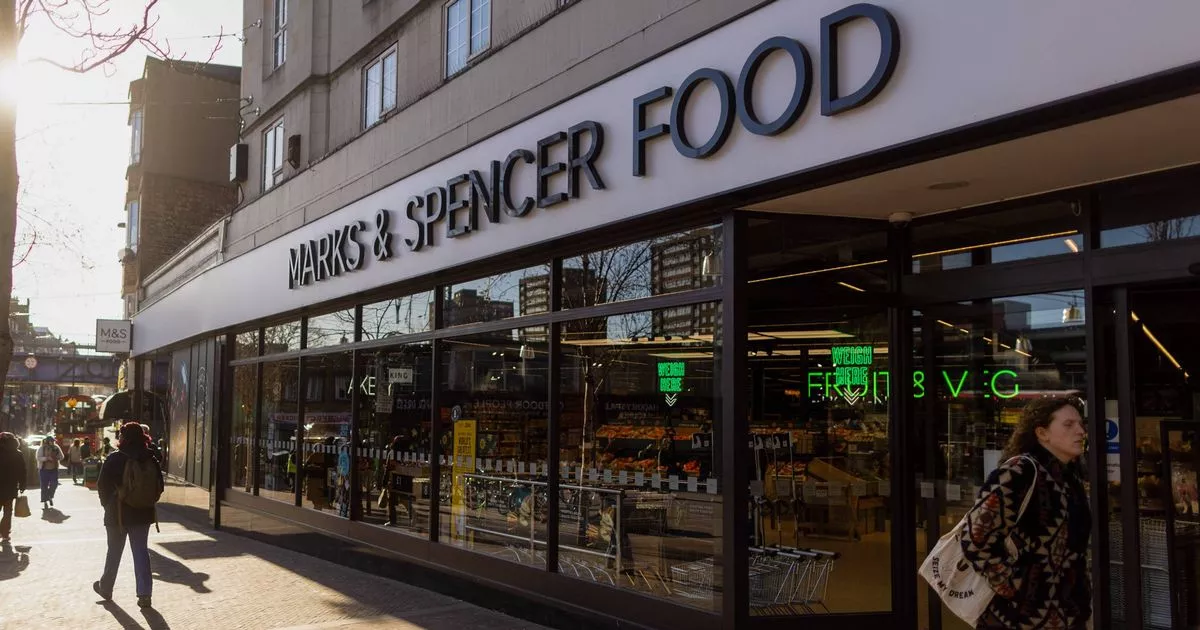
The range will be available in M&S Food Halls from January 5(Image: Bloomberg, Bloomberg via Getty Images)
Marks & Spencer is set to launch a new range of meals and snacks, specially designed to help people taking weight loss medication maintain a healthy diet.
The mass retailer announced its Nutrient Dense range, comprised of 20 products carefully formulated to help customers meet their recommended daily intake of fiber, vitamins and minerals. M&S suggests these meals are perfect for those with a reduced appetite or for people taking GLP-1 weight loss drugs.
The range will include an H5O shot, named after its five botanical ingredients, which were chosen and validated by scientists at the Royal Botanic Gardens, Kew. The range also includes coconut water, cold-pressed ginger juice, fruit and vegetable fiber, sea moss, as well as salads, meals and breads like Super Seed Oat Bread.
The move follows a significant increase in the number of people using GLP-1 weight loss drugs. Data provided to the Telegraph by life sciences analytics firm IQVIA revealed that 2.49 million packs of Mounjaro and Wegovy were purchased in July, a substantial increase from 493,000 the previous year.
Sales are said to have increased by a further million between July and August, amid widespread reports of stockpiling in anticipation of a price rise in September. It is estimated that around 90 percent of people using weight loss injections purchase them online or at major pharmacies.
The NHS has started rolling out Mounjaro, but there are strict criteria determining patient eligibility. Over the next three years, the health department plans to administer the shots to about 240,000 people.
Nutrient-dense foods are those that offer a higher concentration of vitamins, minerals, fiber, healthy fats, and protein relative to their calorie content. M&S referenced recent results from the government’s 2025 National Diet and Nutrition Survey, which revealed that 96% of the UK population does not meet the daily fiber recommendation.
Annette Peters, Head of Food Trends at M&S, expressed her enthusiasm for the new range: “The Nutrient Dense range is very exciting and is also incredibly useful for anyone trying to achieve their nutritional goals. It’s also great if clients are reducing their food intake, such as those taking weight loss medications.
She added: “We know that the use of GLP-1 medicines is growing, so it is more important than ever to ensure that even if people are eating smaller portions, we are helping to provide them with the right level of nutrients.”
Annette continued: “We challenged ourselves to make products that are more nutrient dense than calorie dense, so that every bite is packed with more of the good stuff we all need.”
The Nutrient Dense range will be available in M&S Foodhalls from 5 January.
Looking for more from MyLondon? Subscribe to our daily newsletters here for the latest and greatest updates from London.
Source link
#launches #brand #range #customers #lose #weight
President Donald Trump and Ukrainian President Volodymyr Zelensky shake hands at the start of a joint news conference following a meeting at Trump’s Mar-a-Lago club, Sunday, Dec. 28, 2025, in Palm Beach, Fla. (AP Photo/Alex Brandon)
PALM BEACH, Fla. (AP) — Ukraine and Russia are “closer than ever” to a peace deal, President Donald Trump said Sunday as he hosted Ukrainian President Volodymyr Zelenskyy at his Florida resort.
He acknowledged, however, that the negotiations are complex and could still fail, leaving the war to drag on for years.
The president’s statements came after the leaders met for talks following what Trump called an “excellent” 2 1/2 hours of telephone conversation with Russian President Vladimir Putin, whose invasion of Ukraine sparked the war nearly four years ago.
Trump said he believed Putin still wanted peace, even as Russia launched a new round of attacks on Ukraine while Zelensky flew to the United States for the latest round of negotiations.
“Russia wants to see Ukraine succeed,” Trump said at a late afternoon news conference as he stood alongside Zelensky after their meeting. He repeatedly praised his counterpart as “courageous”.
Both Trump and Zelensky acknowledged that thorny questions remain, including whether Russia can retain the Ukrainian territory it controls, as well as security guarantees for Ukraine to ensure it is not invaded again in the future. After their discussion, they convened a large group of European leaders, including Ursula von der Leyen, president of the European Commission, and the leaders of Finland, France, Germany, the United Kingdom and Poland.
Zelensky said Trump had agreed to host European leaders again, possibly at the White House, sometime in January. Trump said the meeting could take place in Washington or “somewhere.”
Zelensky thanked Trump for his work. “Ukraine is ready for peace,” he said.
Trump and Putin will talk again
Trump said he would follow the meeting with another call to Putin. Earlier on Sunday, Putin’s foreign affairs adviser, Yuriy Ushakov, said the Trump-Putin call was initiated by the American side and was “friendly, benevolent and pragmatic.” Ushakov said Trump and Putin agreed to speak again “quickly” after Trump’s meeting with Zelensky.
But Ushakov added that a “bold and responsible political decision is needed by kyiv” on the bitterly contested Donbass region in eastern Ukraine and other disputed issues for there to be a “complete cessation” of hostilities.
Both leaders identified the choice of the future of the Donbas region as a major sticking point.
Trump said the sides were moving closer to a deal. “It’s a very difficult issue but one that I think will be resolved,” he said.
Zelensky said: “Our attitude is very clear. That is why President Trump said that this is a very difficult issue and, of course, we have different positions on this with Russia.”
However, Trump said he still believed Putin was “very serious” about ending the war, even as Russia continued to strike targets in Ukraine while Zelensky traveled to the United States. Trump said: “I think Ukraine has also launched some very powerful attacks. »
He raised the possibility that the negotiations could still fail.
“In a few weeks we’ll know one way or the other, I think,” Trump said. “We might have something where something you don’t think about is a big thing and breaks it. Look, this was a very difficult negotiation. Very detailed.”
The meeting between Trump and Zelensky underscored the apparent progress made by Trump’s top negotiators in recent weeks, as the sides exchanged draft peace plans to end the fighting. Zelenskyy told reporters Friday that the 20-point draft proposal discussed by negotiators was “about 90 percent ready” — echoing a figure and optimism expressed by U.S. officials when Trump’s chief negotiators met with Zelenskyy in Berlin this month.
During recent negotiations, the United States agreed to offer Ukraine certain security guarantees similar to those offered to other NATO members. The proposal comes as Zelensky says he is ready to abandon his country’s candidacy for the security alliance if Ukraine benefits from NATO-like protection, intended to protect it against future Russian attacks.
“Intensive” weeks to come
Zelensky also spoke on Christmas Day with US special envoy Steve Witkoff and Jared Kushner, Trump’s son-in-law. The Ukrainian leader said they discussed “some substantive details” and warned that “there is still work to be done on sensitive issues” and that “the coming weeks could also be intense.”
The US president has worked to end the war in Ukraine for much of his first year in office, venting anger at both Zelensky and Putin while publicly acknowledging the difficulty of ending the conflict. Gone are the days when, as a candidate in 2024, he boasted of being able to resolve fights in a day. Indeed, on Sunday, Trump spoke several times about the complexity of the negotiations.
After welcoming Zelensky to the White House in October, Trump demanded that Russia and Ukraine stop fighting and “stop at the battle line,” implying that Moscow should be able to hold on to the territory it captured from Ukraine.
Zelensky said last week he would be ready to withdraw his troops from Ukraine’s eastern industrial heartland as part of a plan to end the war, if Russia also withdrew and the area became a demilitarized zone monitored by international forces.
Putin wants Russian achievements to be preserved, and more
Putin has publicly stated that he wants all areas of four key regions that have been captured by his forces, as well as the Crimean peninsula, illegally annexed in 2014, to be recognized as Russian territory. He also insisted that Ukraine withdraw from some areas of eastern Ukraine that Moscow’s forces have not captured. Kyiv has publicly rejected all these demands.
The Kremlin also wants Ukraine to abandon its NATO candidacy. He warned that he would not accept the deployment of troops from the military alliance and that he would consider them a “legitimate target”.
Putin also said Ukraine must limit the size of its army and grant official status to the Russian language, demands he made from the start of the conflict.
Ushakov told business daily Kommersant this month that Russian police and national guards would remain in parts of Donetsk – one of the two main regions, along with Luhansk, that make up the Donbass region – even if it became a demilitarized zone under a possible peace plan.
Ushakov warned that trying to reach a compromise could take a long time. He said U.S. proposals that took Russian demands into account had been “worsened” by changes proposed by Ukraine and its European allies.
Trump appeared somewhat receptive to Putin’s demands, saying the Russian president could be persuaded to end the war if kyiv agreed to cede Ukrainian lands in the Donbas region and if Western powers offered economic incentives to bring Russia back into the global economy.
YOUNGSTOWN — Mahoning County Common Pleas Court Judge John Durkin dismissed charges of aggravated murder, murder,…
YOUNGSTOWN — Club 211, 1666 Mahoning Ave., was cited for a liquor license violation early Friday after police…
Source link
#Trump #Ukraine #peace #deal #closer #News #Sports #Jobs
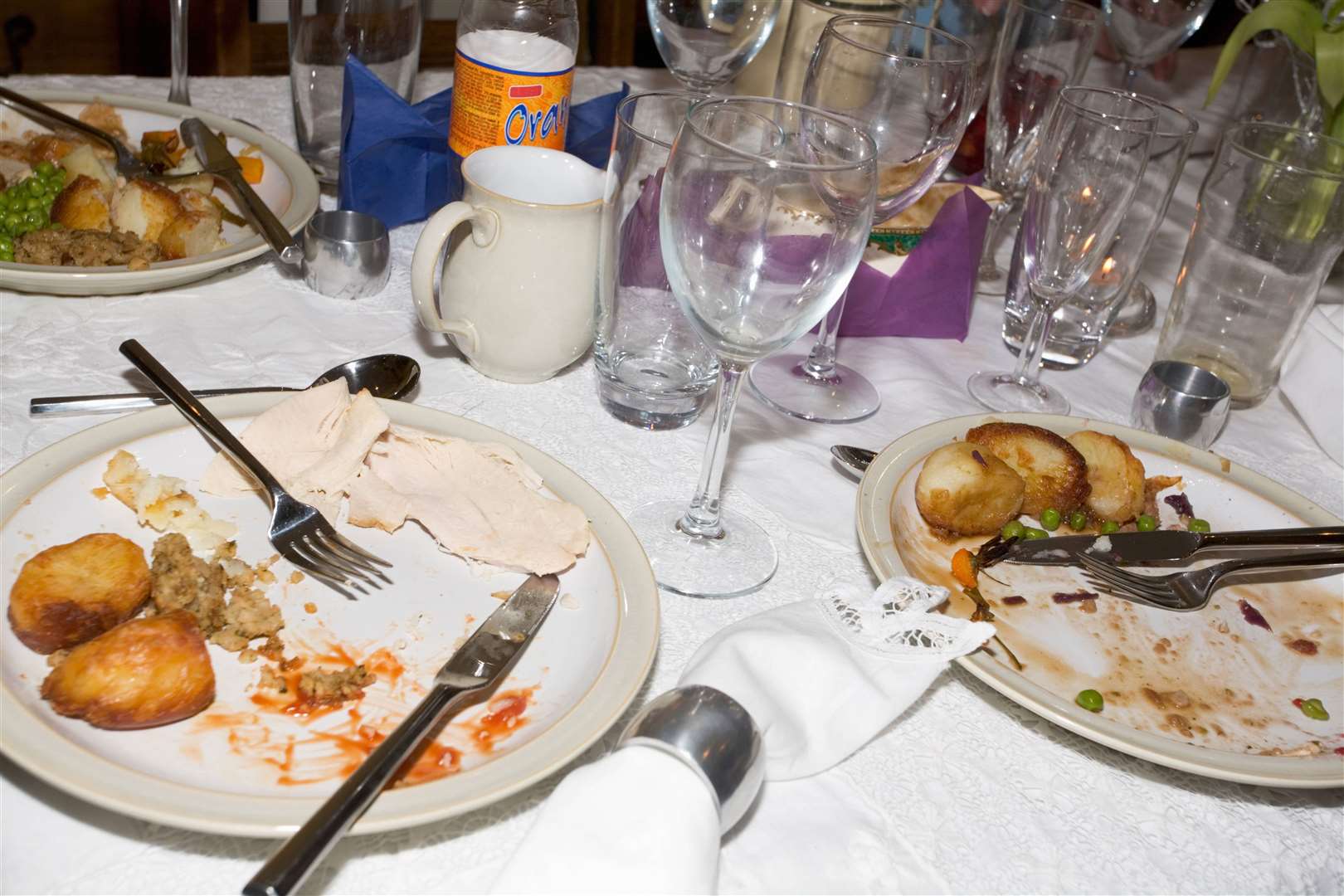
Households have been urged to spend Boxing Day using leftovers from Christmas dinner, as figures suggest food waste will cost a family of four an average of £1,000 this year.
Households are expected to throw away around 85,000 tonnes of edible Christmas food this festive period alone, according to estimates from the Waste and Resources Action Program (Wrap) and the Office for National Statistics.
Some 16 million tonnes of CO2 are generated by UK households each year from wasted consumable food and drink, Wrap said.
A third of all the food we grow is wasted, and this is especially evident at Christmas
Throughout the year, almost 40% of food waste is due to it not being used on time – either because people think the product smells bad or looks bad, or because it is past its original date, according to a study carried out for the organization.
Every year, UK households throw away 480,000 tonnes of potatoes, or 41% of all potatoes purchased.
Wrap urged households to keep potatoes – and all other uncut fruit and vegetables, except onions, bananas and whole pineapples – in the fridge at 5C or below.
He also reminded consumers that food past its expiration date is safe to eat for days, months, or even years afterward, and that people should use their own judgment in deciding whether their food is edible.
However, “use by” labels refer to safety and foods should not be consumed after this date.
Catherine David, chief executive of Wrap, said: “A third of all the food we grow is wasted, and this is particularly visible at Christmas, a time when we want to have a feast, but at the same time household budgets are particularly strained.
“We can stretch our money further and protect our planet’s precious resources this Christmas by making sure we make the most of our leftovers and following Love Food Hate Waste’s simple tips and tricks to ensure we love our food, hate our waste and get as much food on people’s plates and bellies as possible.”
Circular Economy Minister Mary Creagh said: “More than half of food waste happens in our homes, so reheating extra roasts and making the traditional turkey curry can save money and reduce carbon emissions.
“With the Government’s £13.5 million in grants to food charities to redistribute 19,000 tonnes of surplus food from farms, small changes can help the Christmas food shop go further and end up in the freezer and not the food waste basket.”
The focus on food waste comes as appliance brands launch built-in AI tools to help consumers use the contents of their fridges and freezers.
Hisense’s ConnectLife app now includes Dish Designer, which uses AI to create personalized recipes from the contents of its fridges and freezers – a feature similar to Samsung’s Bespoke AI fridge-freezers which have touchscreens that generate recipes, largely by scanning what’s inside the fridge.
Hisense Dish Designer feature (Hisense/PA)
Hisense’s Dish Designer can customize recipes based on household dietary needs, and members can add products in the refrigerator and cupboards to an “inventory,” which is used to generate recipes.
Hisense said around 30,000 recipes have been generated in total across Europe since Dish Designer launched in May.
Of these, approximately 12,000 revenues were generated in the United Kingdom.
Leftover Wrap Recipes can be found online at 20 Tasty Recipes to Use Up Christmas Leftovers from Love Food Hate Waste.
Source link
#Households #urged #spend #Boxing #Day #Christmas #leftovers