
News & Knowledge / Facts
Atomic clocks control our lives: that’s why there are detonations everywhere at the same time on New Year’s Eve #Atomic #clocks #control #lives #detonations #time #Years #Eve



Keystone
Without precise time, the modern world is collapsing – from GPS to the power grid. And Switzerland is one of the pioneers of this invisible order.
No time? blue News summarizes for you
- The exact time of midnight is determined by UTC universal time, which is based on measurements from many atomic clocks around the world.
- Atomic clocks are essential to our digital infrastructure because they provide highly precise time, necessary for GPS, power grids, mobile communications and the Internet, among other things.
- Switzerland plays a key role in atomic clock technology.
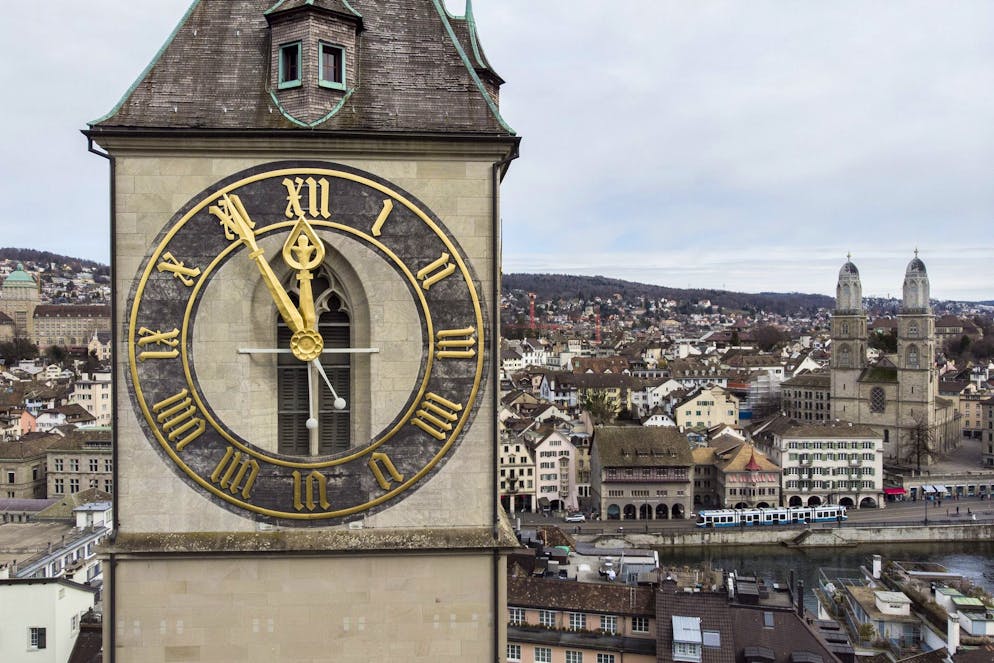
When the last seconds are counted down on New Year’s Eve, millions of people count on the clock on their cell phone, on their television or the clock in their church steeple. They all count together – five, four, three, two, one. But who really decides when exactly midnight is?
The answer leads to a world that almost no one knows about – and without which our modern daily life would immediately collapse.
Who decides when exactly midnight is?
Midnight is not about emotion. Nor is it determined by a single clock. The official world time is called UTC – Universal Time Cooperative. This time results from a global interaction of hundreds of high-precision atomic clocks, distributed in specialized laboratories around the world.
Your data circulates together at the BIPM (International Bureau of Weights and Measures) in Paris. A single bond time is calculated from all measurements. “It’s the benchmark that the whole world follows,” Steve Lecomte, member of the management team of the Swiss CSEM research center and head of the instrumentation sector, tells blue News. CSEM is active in the fields of micromanufacturing, digitalization and renewable energies, with its headquarters in Neuchâtel.
Switzerland is also part of this network: Metas, the Federal Metrology Institute in Bern, supplies temporal data to Paris. Swiss time is also directly integrated with world time.
Why is the notion of time no longer enough today?
In the past, it was enough to look at the sun. Later on a mechanical watch. Today, that is no longer enough. The reason: our world is highly connected, digital and automated. Billions of processes are running simultaneously – and they need to be perfectly synchronous.
Quartz watches, like those found in wristwatches, are practical but not perfect. “A quartz vibrates freely,” explains Lecomte. Temperature, pressure or magnetic fields can modify its frequency and thus distort time.
Keystone
Atomic clocks get around this problem. They use atoms – often cesium – as a clock. These atoms always vibrate in the same way. Everywhere. “An atom is a universal reference. A hydrogen atom behaves the same way on Earth as it does on the other side of the universe,” explains Lecomte. This makes atomic clocks extremely stable.
One second too late – what would really happen?
A second seems trivial. In the world of high technology, this is gigantic. This is particularly evident with GPS.
Satellite navigation works by receiving signals from multiple satellites. The position is calculated from the transit time of these signals. Each satellite broadcasts its exact position and current high-precision GPS time based on atomic clocks. The receiver measures the signal travel time. Multiplied by the speed of light, this gives the distance to the satellite.
But light is fast: around 300,000 kilometers per second. Lecomte calculates: “In a nanosecond (a billionth of a second, editor’s note) The light travels about 30 centimeters. In order to be able to measure our position with an accuracy of about one meter, we need to determine the time with an accuracy of at least three nanoseconds.
This means: Even a small time error results in a position error. If the time was slightly wrong, your smartphone would suddenly point you down the wrong street – or hundreds of meters away.
And GPS is just one example. Mobile networks, internet nodes and power grids also depend on the exact time.
What do electricity, the Internet and mobile communications have to do with time?
Electricity networks operate at a fixed frequency – in Europe 50 Hertz. This frequency must be synchronous everywhere. “If two waves are not synchronized, they cancel each other out,” explains Lecomte. Result: instability, breakdowns – in the worst case, damage or power outages.
Mobile networks work the same way. Thousands of antennas send and receive data. Without a common time base, data packets would collide. Videos stutter, phone calls drop, networks crash – especially during busy times like New Year’s Eve.
This is why mobile phone stations use time references from satellites and also protect themselves with local atomic clocks in the event of a satellite signal failure.
Data centers and cloud systems also need accurate time. Data is processed, compared and stored at the same time. Without precise synchronization, chaos reigns.
The key role of silent Switzerland
Although the market for atomic clocks is small, they are of extremely strategic importance. And this is precisely where Switzerland plays a central role.
A unique ecosystem has developed over the decades in Neuchâtel: universities, high-tech companies and research centers like CSEM work in close collaboration. Atomic clocks for telecommunications, satellites, navigation, military and science are created here.
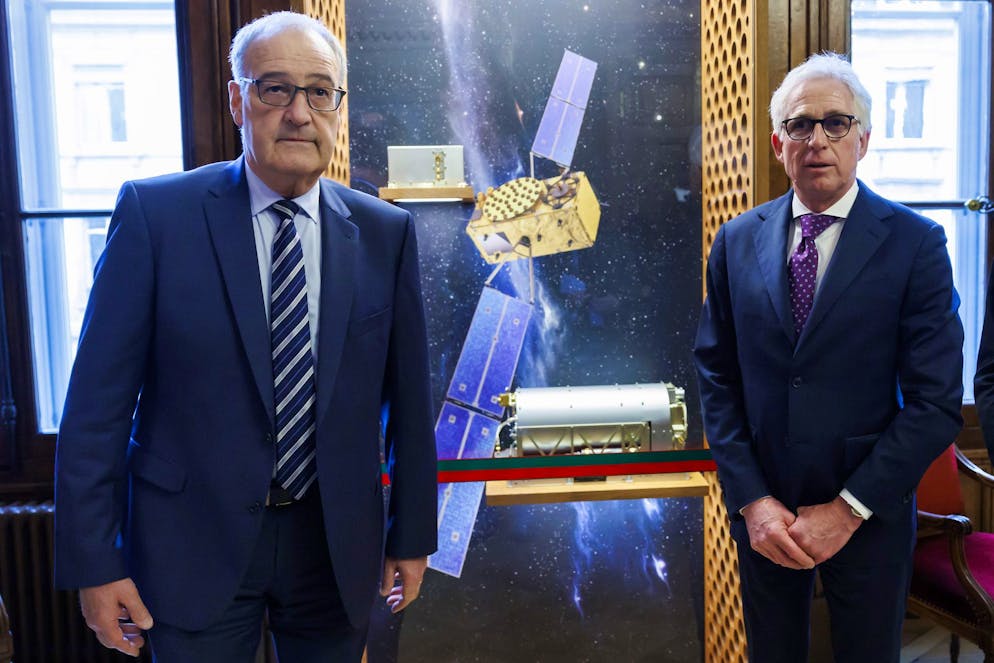
“Certain atomic clocks on the Galileo satellites come from Neuchâtel,” explains Lecomte. Galileo is the European civil global satellite navigation system allowing very precise positioning and synchronization. Swiss atomic clocks have also been involved in historic projects, for example in synchronizing telescopes that made the first image of a black hole possible.
Keystone
Switzerland’s political neutrality is an advantage. “Time is a strategic technology,” explains Lecomte. Countries want to remain independent. “China, for example, is reluctant to buy atomic clocks from the United States. » Swiss solutions, on the other hand, enjoy great confidence throughout the world.
Do we notice any of this in everyday life?
Actually no. And that’s exactly what’s amazing. As long as everything works, we don’t notice how precisely time is measured. We browse, stream, make phone calls, pay – without thinking about it.
But if there was no time, chaos would be immediate. This is not a gradual effect, but a sudden collapse of digital systems. “Without atomic clocks, our current networked world would not be possible,” says Lecomte.
Will time become even more important in the future?
“Yes,” replies Steve Lecomte. Artificial intelligence, autonomous vehicles and decentralized energy systems require perfect timing. The reason: “Machines must make decisions simultaneously, compare data in real time and maintain the stability of networks,” explains Lecomte.
Keystone
Where can I check the time on New Year’s Eve?
To toast at exactly the right time, you’ll probably need an atomic clock at home. But don’t worry: our smartphones are also extremely accurate. They continuously synchronize with official atomic clocks via the Internet (NTP server) or mobile networks (GPS signals), so deviations are only on the order of fractions of a second and are usually not noticed.
Even an atomic clock expert doesn’t think about nanoseconds at the end of the year: “Until now, I never needed an atomic clock to celebrate the New Year,” says Lecomte. And us, the laity? Like every year, we count down and make a toast. But it’s good to know that in the background, the most precise clocks in the world are ensuring that midnight is indeed midnight.
Source link
#Atomic #clocks #control #lives #detonations #time #Years #Eve











News & Knowledge / Facts
U.S. jobless claims fell below 200,000 last week, with layoffs at historic lows #U.S #jobless #claims #fell #week #layoffs #historic #lows

WASHINGTON – Fewer Americans filed for unemployment benefits last week, as layoffs remained low despite a weak job market.
U.S. unemployment claims for the week ending Dec. 27 fell 16,000 to 199,000 from 215,000 the previous week, the Labor Department reported Wednesday. Analysts surveyed by data firm FactSet forecast 208,000 new apps.
Claims for unemployment benefits are often skewed during shortened vacation weeks. The shorter week may cause some people who have lost their jobs to delay filing their applications.
The weekly report was released a day early due to the New Year holiday.
Applications for unemployment aid are considered a proxy for layoffs and are close to a real-time indicator of the health of the labor market.
Earlier this month, the government announced that the United States gained 64,000 jobs in November, but lost 105,000 in October, as federal workers left following the Trump administration’s budget cuts. This helped push the unemployment rate to 4.6% last month, the highest since 2021.
October’s job losses were caused by a drop of 162,000 federal employees, many of whom resigned at the end of the 2025 fiscal year on September 30 under pressure from billionaire Elon Musk’s U.S. government pay purge.
The Labor Department’s revisions also cut 33,000 jobs from the August and September payrolls.
Recent government data revealed a labor market in which hiring has clearly lost momentum, hampered by uncertainty over President Donald Trump’s tariffs and the lingering effects of high interest rates the Fed has implemented in 2022 and 2023 to curb a pandemic-induced burst of inflation. Since March, job creation has fallen to an average of 35,000 per month, compared to 71,000 for the year ended in March.
Earlier this month, the Federal Reserve cut its benchmark rate by a quarter point, its third consecutive cut.
Fed Chairman Jerome Powell said the committee reduced borrowing costs out of concern that the labor market may be even weaker than it appears. Powell said recent employment numbers could be revised down by as much as 60,000, which would mean employers have actually cut an average of about 25,000 jobs per month since the spring.
Companies that recently announced job cuts include UPS, General Motors, Amazon and Verizon.
The Labor Department’s report released Wednesday also showed that the four-week average of claims, which smooths out some of the weekly volatility, increased by 1,750 to 218,7500.
The total number of Americans filing for unemployment benefits for the previous week ending Dec. 20 fell by 47,000 to 1.87 million, the government said.
Copyright 2025 The Associated Press. All rights reserved. This material may not be published, broadcast, rewritten or redistributed without permission.
Source link
#U.S #jobless #claims #fell #week #layoffs #historic #lows
News & Knowledge / Facts
Trump’s TACO tariff parade: Here are all the times he talked a big game and didn’t back it on trade #Trumps #TACO #tariff #parade #times #talked #big #game #didnt #trade
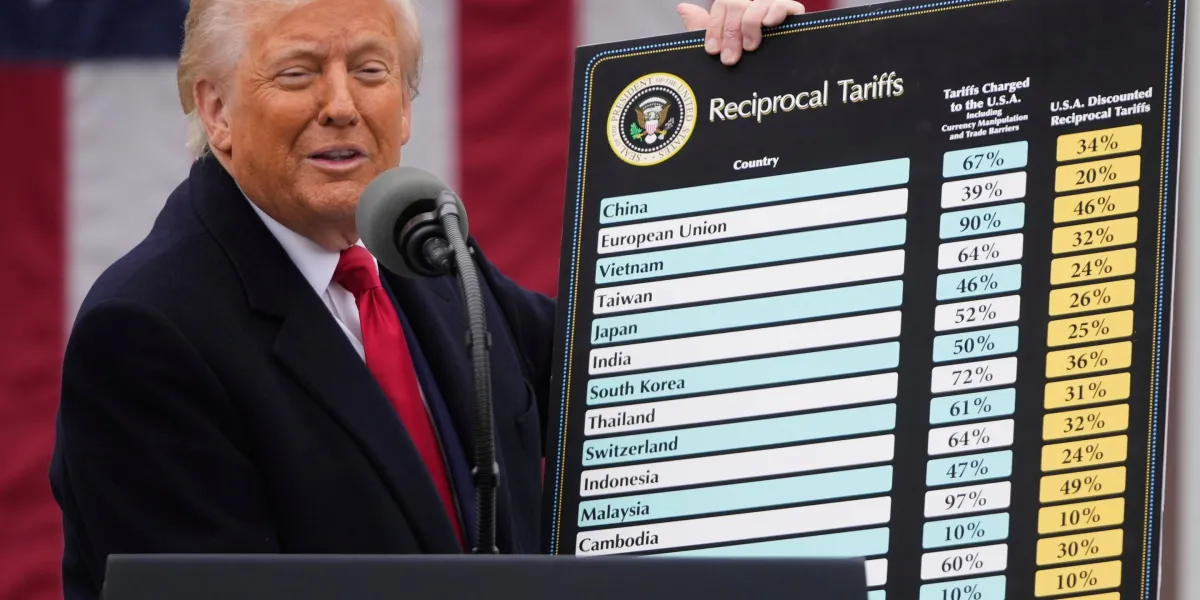
President Donald Trump has made numerous tariff threats and trade promises this year. Many of them came in the form of a series of new import taxes that upended decades of U.S. economic policy – but others have yet to be implemented as 2025 draws to a close.
Some of Trump’s unrealized threats reflect a broader approach by a president with a history of using exorbitant levies to pressure other countries into new trade deals, one-off retaliations or even to punish political critics. At the same time, they came as a growing list of tariffs took effect — from Trump’s punitive new taxes on imported metals to quid pro quo levies with major U.S. trading partners like China — plunging consumers and businesses around the world into uncertainty.
Here’s what Trump said in announcing some of his biggest (but still unfulfilled) tariff threats and promises this year, and where things stand today.
External Revenue Service
In his words:
What happened: At the end of December, the Foreign Revenue Service had not yet been created. While administration officials have continued to reiterate plans to launch the Foreign Revenue Service during the first months of Trump’s return to office, the entity does not yet exist.
200% tariff on European wines, champagnes and spirits
In his words:
What happened: The EU’s proposed levy on American whiskey — which it unveiled as part of a broader retaliation in response to Trump’s new steel and aluminum tariffs — was postponed, with the latest delay expected to run until at least February.
Trump’s threat of 200% tariffs on European alcohol never materialized. But spirits were not included in the EU-US trade deal reached over the summer, which set a 15% rate on most European imports.
100% rate on films made abroad
In his words:
What happened: Despite Trump’s repeated threats, the United States has yet to impose 100% tariffs on foreign films. After its initial promise in May to begin the process, the White House said no final decision had been made. It’s also still unclear how the United States would tax a film made abroad.
Prices on pharmaceutical drugs
In his words:
What happened: On October 1, the president did not sign an executive order imposing a 100% tariff on pharmaceuticals, and to date no levy has been implemented. But Trump previously suggested that significant levies on pharmaceutical drugs could come later, telling CNBC in August that he would start by imposing a “small tariff” and potentially raise the rate up to 250%. At the same time, trade deals with specific countries set their own rates or exemptions – the UK, for example, guaranteeing a 0% tariff on all UK medicines exported to the US for three years. The administration also announced deals with specific companies promising lower drug prices.
100% tariff on computer chips
In his words:
What happened: The total ban on computer chips has not yet taken effect. When he announced his intention to impose the levy in August, Trump did not specify the timetable. And other details remained scarce.
$2,000 rate dividend
In his words:
What happened: Details on how, when and if a tariff dividend will reach Americans are still scarce. Budget experts said the math doesn’t hold up. And Treasury Secretary Scott Bessent suggested that might not mean government checks. Instead, Bessent told ABC in November, the reduction could come in the form of tax cuts. White House National Economic Council Director Kevin Hassett also told CBS News that it’s up to Congress to decide.
Source link
#Trumps #TACO #tariff #parade #times #talked #big #game #didnt #trade
Tell us again how your ice agents are not terrorizing American citizens
#ice #agents #terrorizing #American #citizens..


U.S. jobless claims fell below 200,000 last week, with layoffs at historic lows #U.S #jobless #claims #fell #week #layoffs #historic #lows

Trump’s TACO tariff parade: Here are all the times he talked a big game and didn’t back it on trade #Trumps #TACO #tariff #parade #times #talked #big #game #didnt #trade
Tell us again how your ice agents are not terrorizing American citizens…

Bus accident in Chitradurga: Complete list of passengers on board Seabird coach | News from India #Bus #accident #Chitradurga #Complete #list #passengers #board #Seabird #coach #News #India

Investigations underway after man dies in e-scooter crash in Waterford City #Investigations #underway #man #dies #escooter #crash #Waterford #City

How to Evereve Style Real Women: Favorite Influencer Looks to Try #Evereve #Style #Real #Women #Favorite #Influencer
-

 Ireland3 days ago
RIP: Christmas tragedy as two elderly men die following fire at rural Sligo house #RIP #Christmas #tragedy #elderly #men #die #fire #rural #Sligo #house
-

 News & Knowledge / Facts3 days ago
Tango is sad: singer “Chiqui” Pereyra has died #Tango #sad #singer #Chiqui #Pereyra #died
-

 News & Knowledge / Facts4 days ago
Rayan Cherki scores crucial late victory for Manchester City at Nottingham Forest #Rayan #Cherki #scores #crucial #late #victory #Manchester #City #Nottingham #Forest
-

 News & Knowledge / Facts4 days ago
Prisoner on the run in UK after fleeing on Christmas Day #Prisoner #run #fleeing #Christmas #Day
-

 News & Knowledge / Facts3 days ago
New York covered in snow, causing travel chaos #York #covered #snow #causing #travel #chaos
-

 News & Knowledge / Facts3 days ago
Brigitte Bardot is considered the “angel of animals” by the founder of Peta #Brigitte #Bardot #considered #angel #animals #founder #Peta
-

 News & Knowledge / Facts3 days ago
Zelensky to meet Trump as efforts to end Russia-Ukraine war remain elusive #Zelensky #meet #Trump #efforts #RussiaUkraine #war #remain #elusive
-
 Ireland3 days ago
Cutting-edge research into ‘mini-brains’ at the University of Galway #Cuttingedge #research #minibrains #University #Galway