
What if we had more choices
Earlier this week I read an article by Caoimhin Rowland in The Connaught Telegraph titled “Where Has the Promised Metropolis of Mayo Gone?”
He lamented the lack of ambition and urgency regarding urban development in Castlebar/Westport and Mayo in general.
I thought I’d offer my thoughts on why I think people should care more.
I am a 28 year old Castlebar man who has been living away for ten years since finishing my studies at St Gerald’s College in 2015.
For the past decade, I’ve been coming home for Christmas (outside of Covid year). To be honest, I really don’t want it anymore.
For the last few years I have lived and worked as an accountant in Dublin, and this time of year is dominated by going home for Christmas.
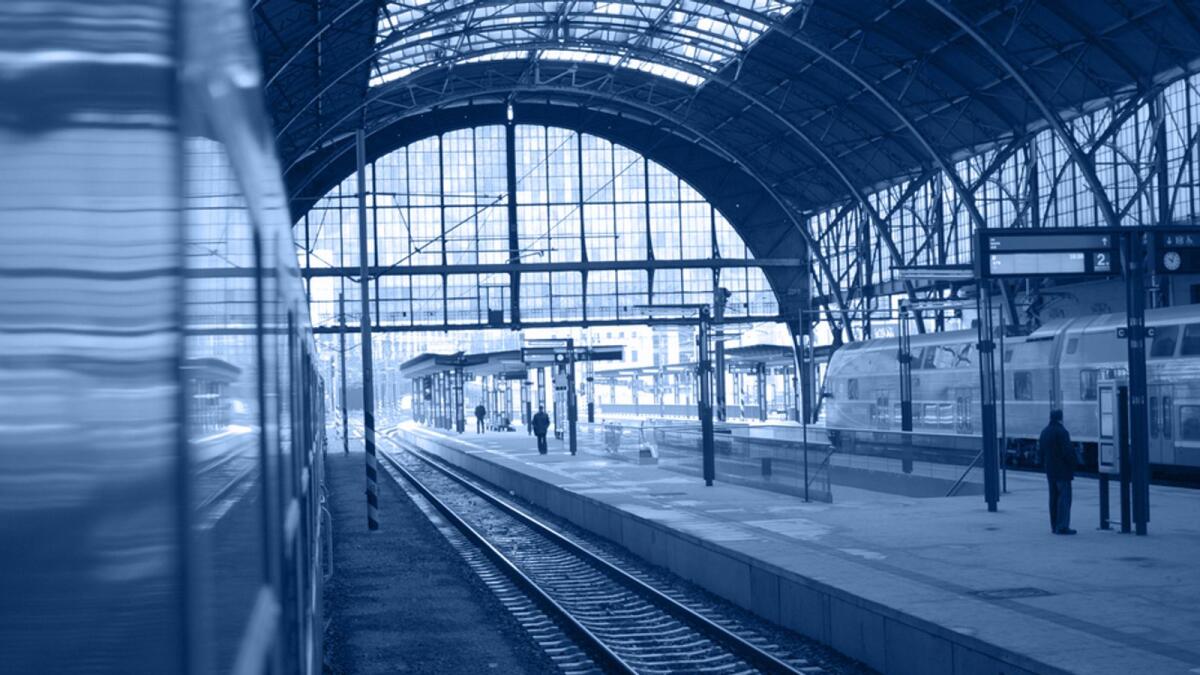
After spending a week or three buying Christmas presents for friends and family, they are packed into a suitcase and put on the train at Heuston station. Like many of the Castlebar and Mayo diaspora living outside of Yew Tree County.
But I ask the question: why do we have to do it?
The real consequence of the paltry attempts at planning at government level is that several reasonably common/accessible professions are no longer viable if you want to live in the West of Ireland (excluding Galway City).
Especially if you are at the start of your career.
Actions or lack thereof have consequences. The most significant consequence is that since the recession that dominated the early 2010s, migration from rural areas to cities has increased exponentially, without any control at the government level.
I have sympathy for those behind the wheel.
From the famine of the mid-19th century until the last 35 years, the Irish population has declined or remained around its current level.
As a result, there has never been a significant need for infrastructure at an aggressive level to accommodate a growing population.
Slow and steady was always enough, but that’s just not the case anymore.
There has also been a significant increase in population. Those who feel there is no place in Ireland should note that we are 80% larger than the Netherlands in terms of land area and have a third of the population.
This is simply a matter of policy and construction.
One of the saddest parts of Christmas is leaving your hometown for Dublin again.
Between December 13 and 31, the city is crowded.
The pubs are full, the shops are busy during the day and you can’t cross the street without running into someone you know who you probably haven’t seen since the previous Christmas.
During this week-long period, Ireland’s cities transform into a eutopia for social activity.
But what if it doesn’t have to be this way?
What if Castlebar (Westport/Ballina/Belmullet, etc.) had the infrastructure and investment to support more jobs in terms of raw number and variety?
As a Mayo expat, what upsets me most is the idea that each city’s unique subcultures are being lost in real time.
In the context of the GAA, it is clear that this movement of people is particularly devastating the junior club scene.
Although Kilmeena’s All-Ireland Junior title victory a few years ago was an incredible achievement, it was alarming to learn that they had carried out part of their training in Athlone/Roscommon to accommodate the majority of the team who live outside the county.
Even the signs at rural juvenile clubs are bleak.
In some age groups, Islandeady and Burrishoole have merged. If this becomes a regular phenomenon, one could assume that the same thing will happen in the adult age group.
In Dublin the problem of a lack of GAA clubs is well documented (particularly within the Hurling Development Committee), while outside the confines of the M50 there are simply too many.
How this translates to Mayo ending the long wait, I’d rather not give an opinion.
However, there are green shoots, everything is not catastrophic. With the expansion of the old GMIT into the ATU network and the start of a wider course offering, this means that commuting is more viable.
This could stem the trend of exodus from the county, which, from a circular economy perspective, can only be a good thing for the locality.
Another critical development could be the planned new train line between Mayo and Galway.
I have always maintained that if this project was done correctly (without too many line changes) students could viably travel from Mayo to NUIG or Galway, usually daily.
The key factor in the point above is that you have to keep people here if you want them to live there.
Indeed, the prospect and practicality of returning once gone is incredibly difficult.
Of course, the world is a big place and many who leave (especially to Canada and Australia) happily go in search of adventure, but these people deserve a chance to be able to return without suffering a substantial shock to their quality of life upon their return. New culture shock.
Like it or not, Yoga, Pilates, Matcha, Artisanal Coffee and Brunch are a way of life for the under 30s in a world where alcohol consumption levels are falling and conditions do not exist for these activities in Mayo’s urban centers.
Businesses of this nature that exist are doing so despite current conditions. When I talk with my peers who long to return home about the reasons they don’t plan to return, they cite two reasons: there is nothing to do, and even if there was, there is no way to make it happen.
Until the conditions and climate for housing, business, higher education and public transport are aggressively addressed, both politically and fiscally, the euphoria of Christmas week in towns like Castlebar across the country will remain an impossible dream.
Considering the likely cost of the Dublin Metro Link, you could take a third of that and revolutionize the North West to the South West.
You might not even need the Metro Link, as the city’s transportation wouldn’t go beyond breaking point due to less demand.
It’s cruel to be able to experience a bustling city for such a short time knowing that in another world, as a generation, we wouldn’t have to come home en masse for Christmas. We would be there already.
When we consider the damage done to these cities over the past 30 years, we feel a premature sense of loss at the thought of what they will look like in 30 years.
Yours,
Michael Loftus, The Brambles, Pontoon Road, Castlebar.