
Middle East
Bank of Palestine Expands Globally after Receiving an In-Principle Approval for a Full Banking License from ADGM Abu Dha #Bank #Palestine #Expands #Globally #Receiving #InPrinciple #Approval #Full #Banking #License #ADGM #Abu #Dha


Ramallah, Palestine /PNN/
Bank of Palestine has received an In-Principle Approval (IPA) from the Financial Services Regulatory Authority (FSRA) of ADGM, the international financial centre of the Capital of the United Arab Emirates (UAE) to obtain a Category 1 (CAT1) License. This authorization will allow Bank of Palestine to conduct the following regulated activities in or from ADGM: Accepting Deposits and Arranging Deals in Investments, targeting the Global Palestinian community at large.
Once fully operational in H2 of 2026, this license will allow the bank to operate globally from ADGM further strengthening its proposition and diversifying its operations leveraging seamless digital banking services.
“This is a historic milestone for Bank of Palestine, ushering in a new era of global reach, digital excellence, and future-proof banking and wealth management,” said Hashim Shawa, Chairman of Bank of Palestine Group. “As we mark 65 years since our founding in 1960, operating from Abu Dhabi, one of the world’s most dynamic international financial hubs, reflects our ambition to serve our people and partners across the globe, building on a legacy of resilience and innovation.”
Linda Tarazi, who brings over two decades of international banking experience, has been appointed CEO of ADGM entity, Bank of Palestine – Global Ltd., where she will lead the bank’s global expansion.
Abu Dhabi provides the ideal environment for this expansion, offering the trust, innovation, and robust regulatory oversight required to scale globally.
Arvind Ramamurthy, Chief Market Development Officer at ADGM, said: “We are pleased to welcome Bank of Palestine to ADGM. Their decision to choose Abu Dhabi as a global launchpad reinforces ADGM’s position as a trusted and well-regulated leading international financial centre in the MENA region. ADGM’s dynamic ecosystem brings together a diverse community of global banks, asset managers, fintech innovators, and professional service providers, all operating within a robust regulatory framework aligned with international standards. BOP’s long-standing history and expertise will further enrich this ecosystem of global financial entities.”
Bank of Palestine Group is the foremost financial institution in Palestine across all operating indicators, with deep expertise in SME financing, financial innovation, and banking under challenging conditions.
The bank has maintained a presence in the UAE since 2015 through its DIFC Representative Office in Dubai and recently expanded its regional footprint by opening a Representative Office in Cairo to serve its growing client base in Egypt.
BOP also enjoys strategic partnerships with leading Development Finance Institutions (DFIs), leveraging diverse financial tools to strengthen the real economy in Palestine. It has earned global recognition for financial, digital, and gender inclusion, and proudly maintains 50% gender balance at the Board level and 45% across its workforce, underscoring its commitment to ESG principles and the UN Sustainable Development Goals.




Middle East
German Bishops’ Leader Visits Dheisheh Refugee Camp, Voices Solidarity With Palestinians #German #Bishops #Leader #Visits #Dheisheh #Refugee #Camp #Voices #Solidarity #Palestinians
Bethlehem, West Bank (PNN)
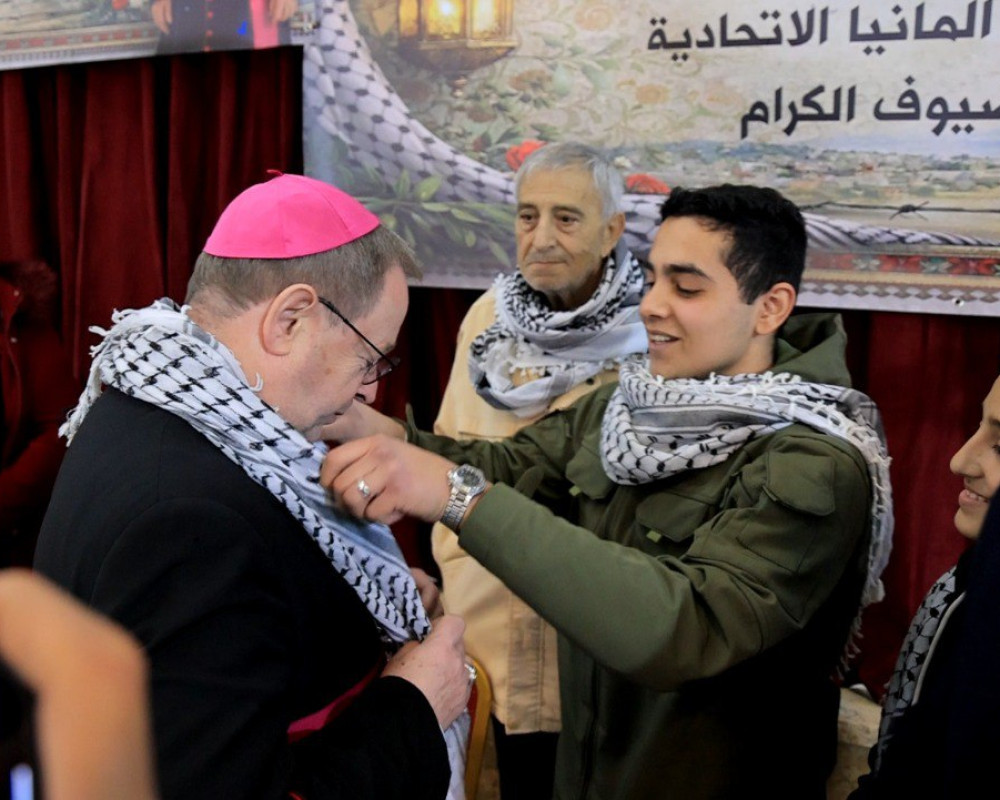
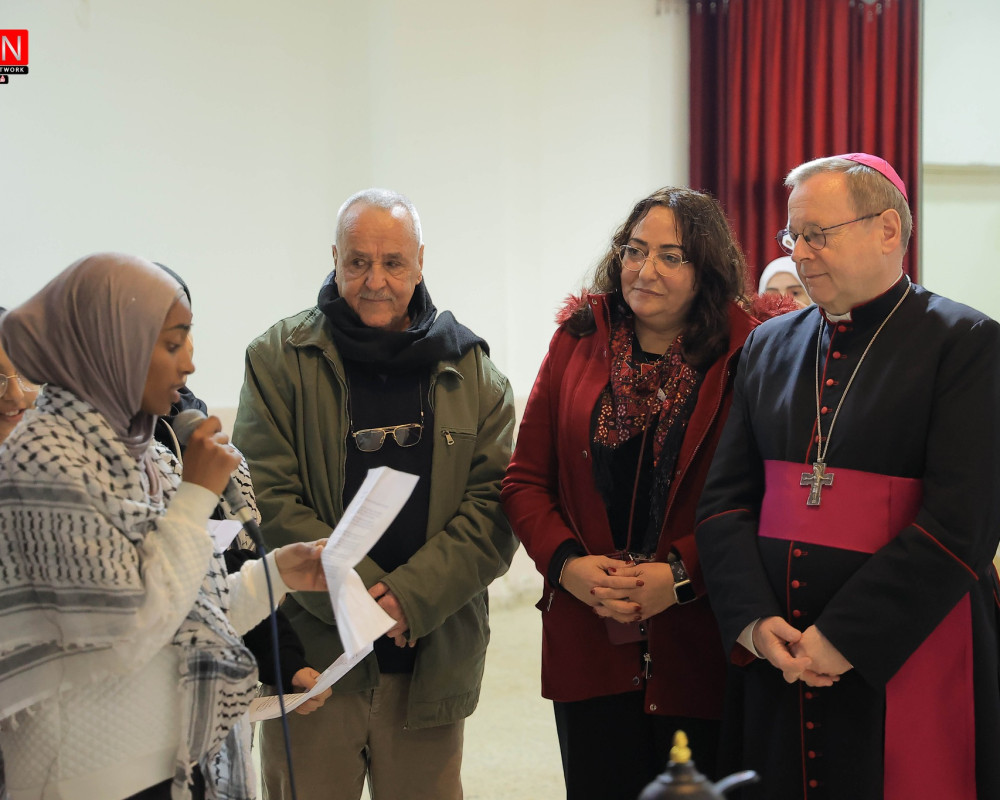
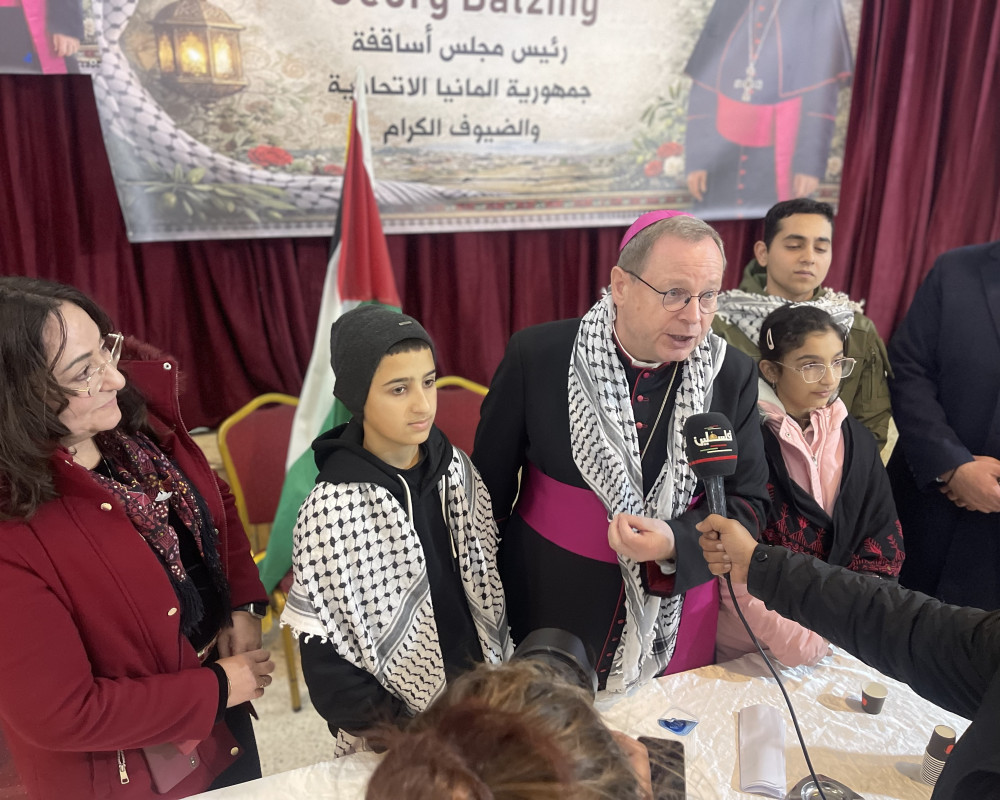
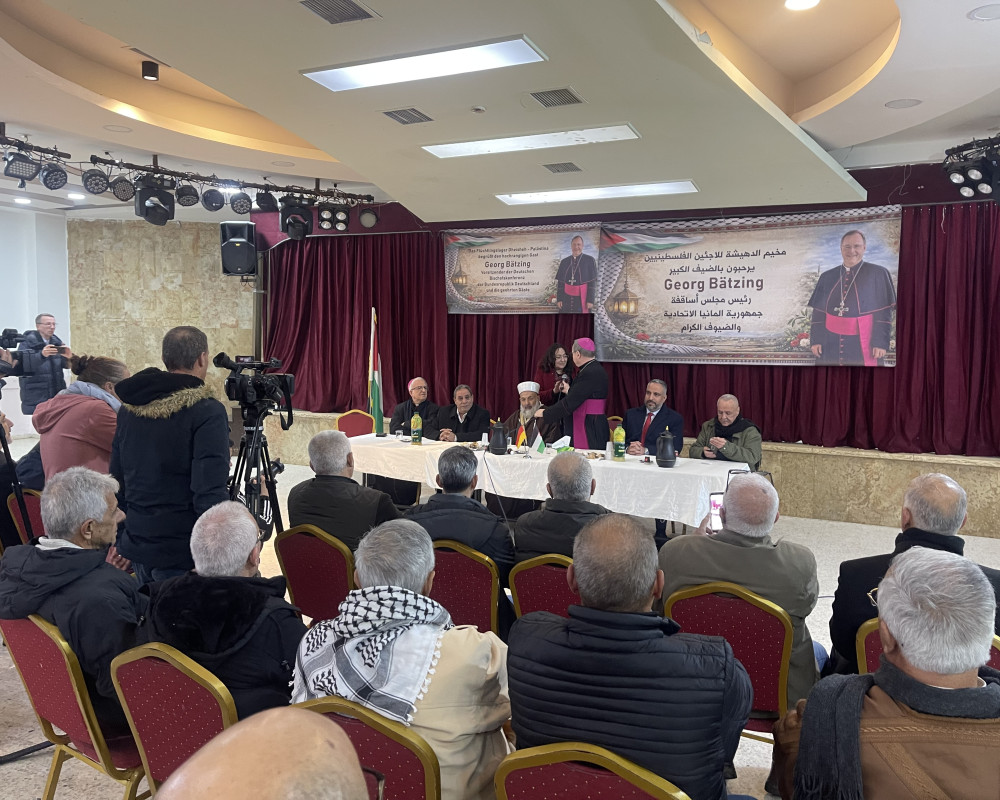
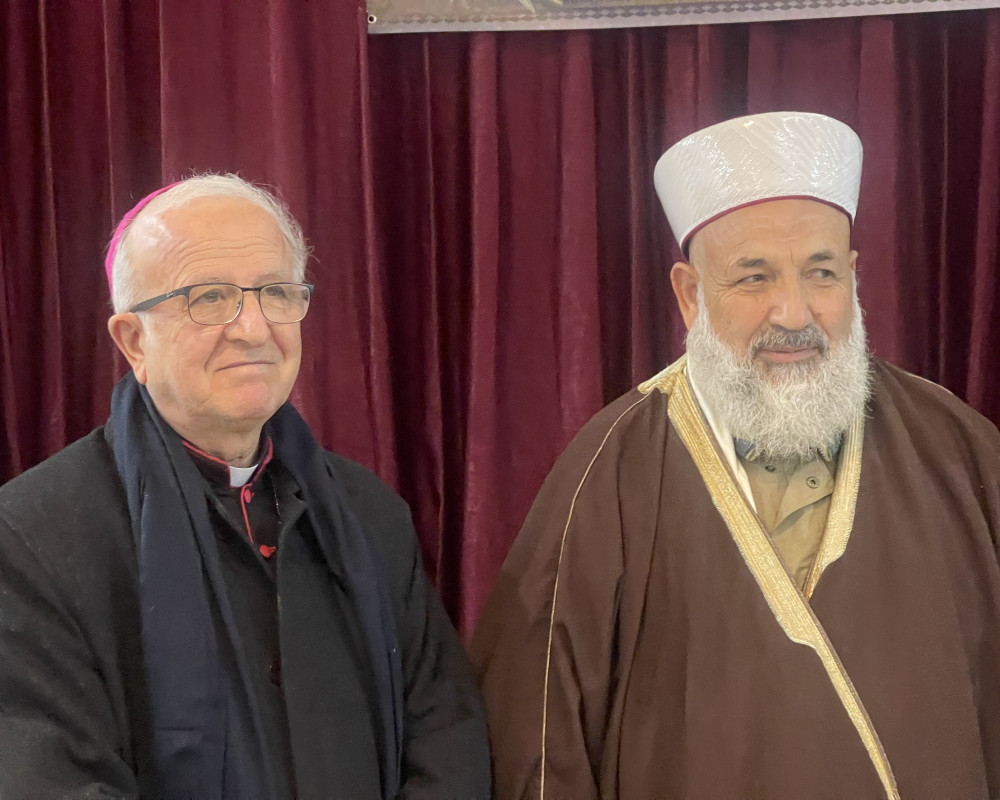
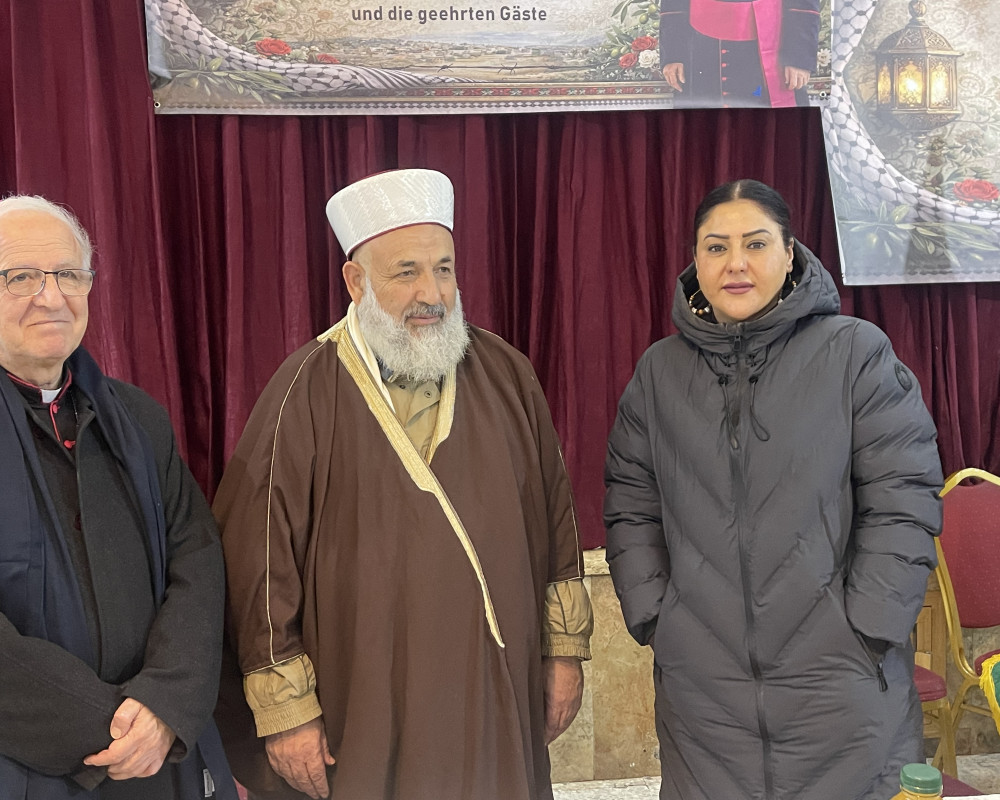
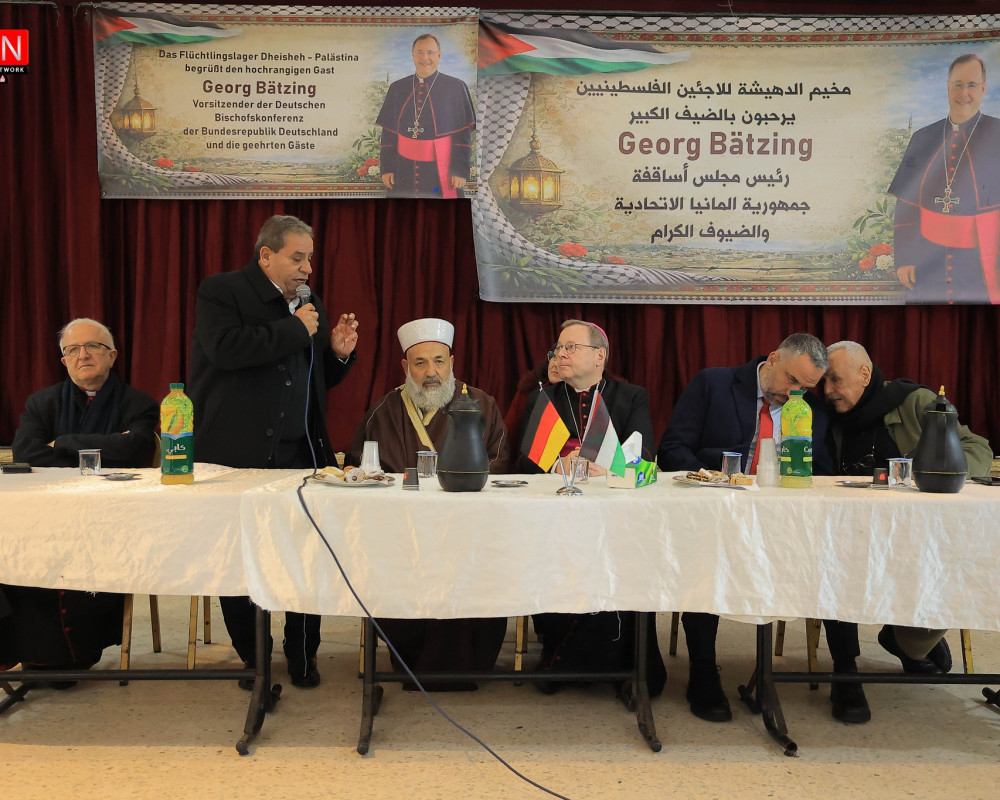
The head of the German Catholic Bishops’ Conference, Bishop Georg Bätzing, and a delegation from German churches visited Dheisheh refugee camp near Bethlehem on Tuesday to express solidarity with the Palestinian people and to see firsthand living conditions in Bethlehem and the camp during their tour of Palestine.
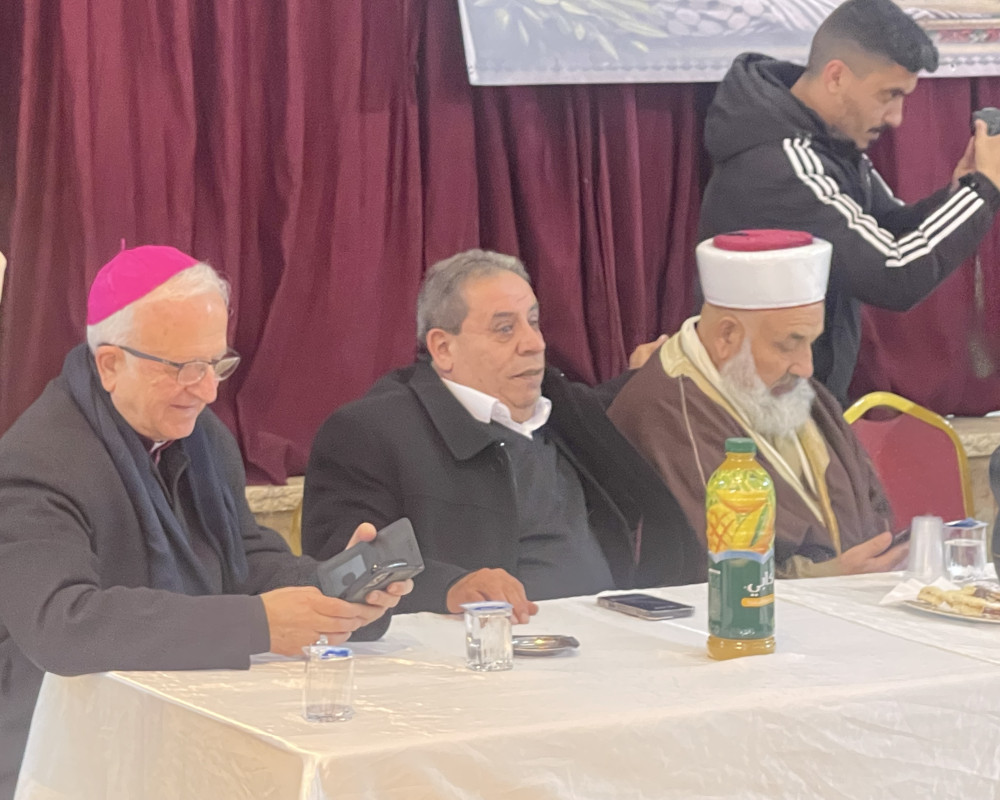
The delegation was received by senior Palestinian officials and religious figures, including Mohammed Khalil al-Lahham, a member of the PLO Central Council; Bethlehem Governor Mohammed Taha Abu Alia; Patriarchal Vicar William Shomali; Bethlehem Mayor Maher Qanawati; Deputy Governor Dawoud Hamri; Rana Melhem, director of the President’s Office in Bethlehem; Sheikh Abdul Majid Atta, the mufti of Bethlehem; Nader Faraj, head of the Refugee Affairs Department’s southern office; as well as representatives of Bethlehem’s civil society, popular committee leaders from Aida, Azza and Dheisheh refugee camps, national factions and local residents.

Palestinians described the timing of the visit as politically and religiously significant, saying it sent a message of solidarity with the Palestinian people in general and Bethlehem in particular, and highlighted what they described as Israeli crimes.
Speaking to Palestine News Network (PNN), Bätzing said he was both shocked and impressed by Palestinians’ resilience in the face of hardship. He said he had expected to encounter a broken people after hearing accounts from officials about what Palestinians have endured, but instead found a population with strong will and determination.
In remarks delivered during a reception in Dheisheh camp, Bätzing said his presence there was a historic moment for him, noting that he was visiting the birthplace of Jesus Christ. He stressed that every person has the right to live in freedom and dignity, praising Bethlehem for sending a message of hope to the world through its Christmas celebrations.

“We may live far from the Holy Land, but you are in our minds and hearts,” he said. “That is why we decided to come and listen to the daily hardships you face.” He added that the Assembly of Catholic Bishops and churches in Germany supports a two-state solution, allowing both Palestinians and Israelis to live in freedom.
Bätzing also praised what he described as the model of coexistence in Bethlehem and Palestine, saying Christians and Muslims live together in love and fraternity. He noted that generations in Dheisheh camp have not lost hope and urged residents not to give up or leave their land, saying his visit was meant to listen to the community and its representatives.
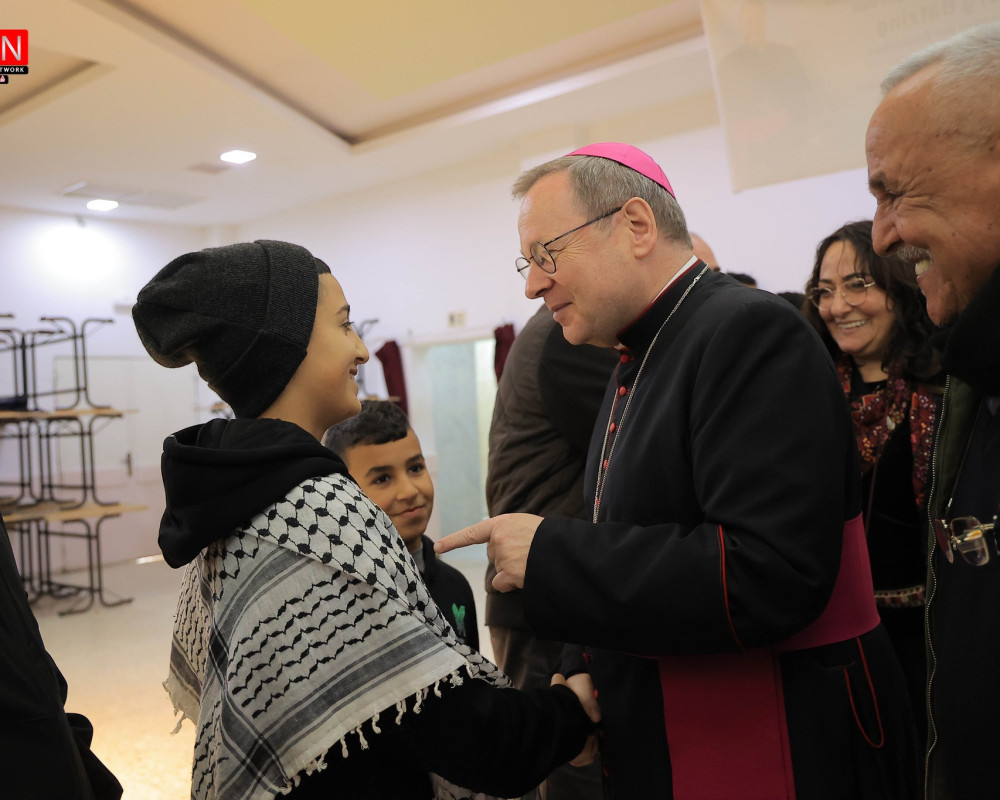
Addressing children and youth in the camp, Bätzing told them they are the future of Palestine, thanking them for their welcome and expressing confidence that they would continue building that future.

Bethlehem Governor Mohammed Taha Abu Alia said the visit to the refugee camp underscored that Palestinians have national and historical rights to their land and deserve to live, like other peoples, in freedom, peace and stability. He said Palestinians are facing “more than a catastrophe,” citing killings, destruction and home demolitions, and said Bethlehem, the birthplace of Jesus, has not been spared daily Israeli measures, including closures, sieges, raids, arrests, the killing of children and land confiscation.
Despite the suffering, Abu Alia said Palestinians chose to mark Christmas as a message of hope, “snatching a moment of joy despite the pain,” and a call for the world to stand with Palestinian rights. He said Bethlehem sent its message by lighting the Christmas tree and welcoming the patriarch, stressing that the city remains safe despite Israeli restrictions controlling all entrances.
In closing, Abu Alia told the German guest that Bethlehem continues to be targeted by the occupation but will remain steadfast with the support of believers.

For his part, Al-Lahham said the visit during Christmas was a source of joy and received wide official
Lahham conveyed greetings from President Mahmoud Abbas to the visiting delegation, saying they bring hope and determination to the Palestinian people and strengthen their resolve to remain on their land, the land of Jesus Christ. He said the visit carries a clear message of support reflected in the delegation’s positions, and he welcomed Germany’s recognition of the State of Palestine, as well as the German churches’ recognition of Palestinian rights.
Addressing the guest, Lahham said: “Your arrival is a blessing, like life-giving rain for Palestine, even as the governorate faces severe hardship.”
Lahham highlighted the suffering and reality facing Palestinians amid pain, killings, siege and what he described as a war of extermination. He spoke about conditions in refugee camps not only in Bethlehem but across Palestine, as well as the situation in villages and cities threatened by settlement expansion, settler attacks, military incursions, land confiscation and water theft.
He also addressed the plight of Palestinian prisoners and their families, expressing hope that the visit would help ease the suffering of the Palestinian people.
Lahham stressed that Bethlehem city and governorate will remain a model of Muslim-Christian coexistence and mutual respect, despite attempts to undermine the Palestinian social fabric. He said Christmas celebrations are a clear reflection of this unity.
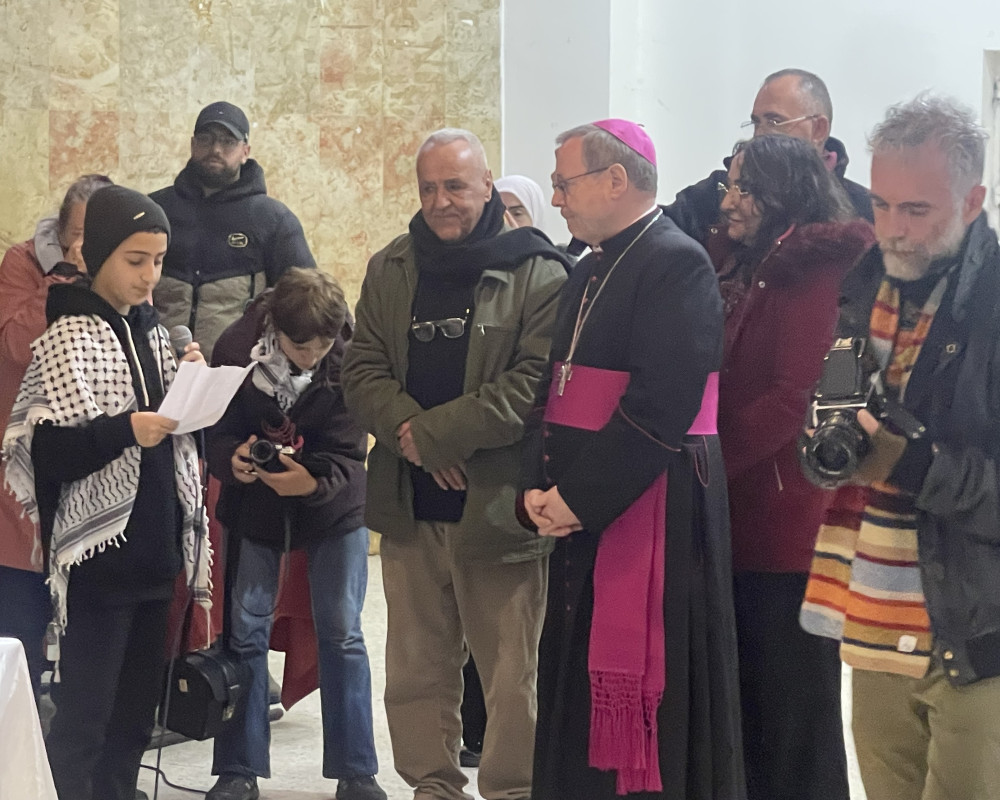
Children from the Dheisheh refugee camp presented messages of peace and love in German to the visiting delegation. Their messages described the persecution, pursuit, pain and suffering endured by Palestinian youth, as well as the targeting of their right to live in peace and freedom.
The children emphasized that both the Bible and the Quran call for preserving human dignity, protecting people and ensuring a decent life. They said Bethlehem has long represented a model of shared life and love, but that this way of life faces daily hardships due to the Israeli occupation, which they said seeks to extinguish Palestinian life. They expressed hope that the delegation would carry Palestine’s message to Germany and the wider world in support of a just and lasting peace.
Middle East
Trump, Netanyahu to meet at crucial time for US-backed Gaza ceasefire #Trump #Netanyahu #meet #crucial #time #USbacked #Gaza #ceasefire
By WILL WEISSERT, SAM MEDNICK and SAMY MAGDY, Associated Press
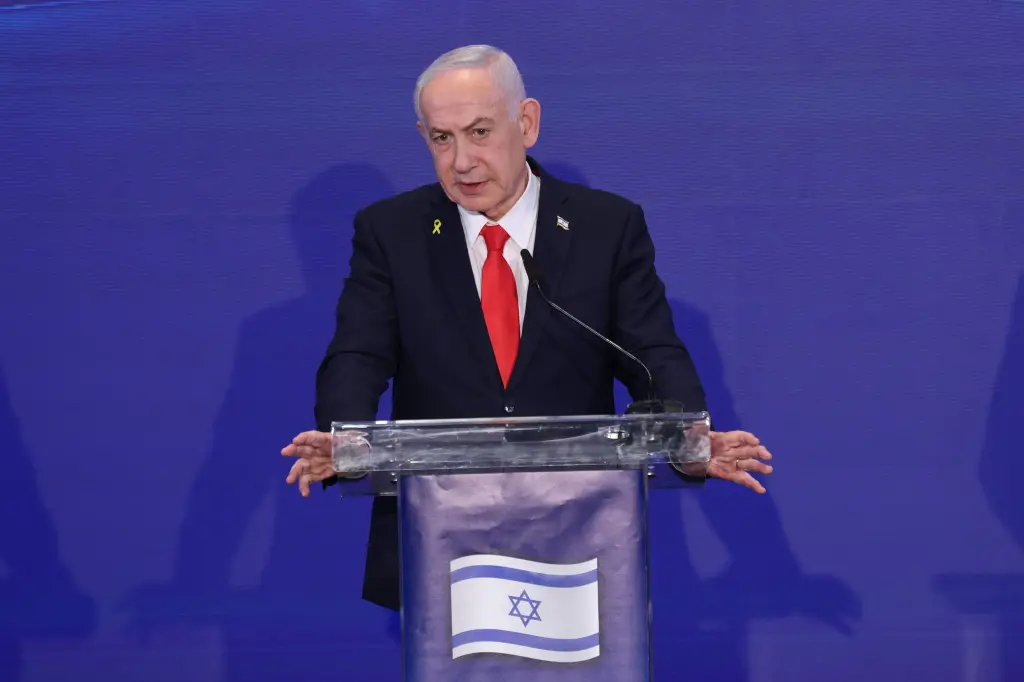
PALM BEACH, Fla. (AP) — President Donald Trump is scheduled to meet with Israeli Prime Minister Benjamin Netanyahu on Monday, as Washington seeks to build new momentum for a U.S.-brokered Gaza ceasefire that could risk stalling before a complicated second phase.
Trump could use his face-off at his Mar-a-Lago estate in Florida to try to leverage his strong relationship with Netanyahu and seek ways to speed up the peace process. Before that, Netanyahu met separately with Secretary of State Marco Rubio and Defense Secretary Pete Hegseth.
The ceasefire between Israel and Hamas, championed by Trump, has mostly held, but progress has slowed recently. Both sides accuse each other of violations, and divisions have emerged between the United States, Israel and Arab countries over the path forward.
The first phase of the truce began in October, days after the second anniversary of Hamas’s first attack on Israel, which killed around 1,200 people. All but one of the 251 hostages taken then were released, alive or dead.
The Israeli leader indicated that he was in no rush to move on to the next phase while the remains of Ran Gvili were still in Gaza. Netanyahu’s office said he met with Gvili’s parents in Florida.
Now comes the next, much more complicated part. Trump’s 20-point plan – which was approved by the UN Security Council – lays out an ambitious vision for ending Hamas’ rule over Gaza.
-

Young Palestinians walk past a tent camp for displaced people as the sun sets in Nuseirat, central Gaza Strip, Friday, Dec. 26, 2025. (AP Photo/Abdel Kareem Hana)


1 of 4
Young Palestinians walk past a tent camp for displaced people as the sun sets in Nuseirat, central Gaza Strip, Friday, Dec. 26, 2025. (AP Photo/Abdel Kareem Hana)
Develop
Iran and other topics likely to be discussed
The two leaders are also expected to discuss other issues, including Iran, whose nuclear capabilities Trump said were “completely and utterly wiped out” after U.S. strikes on its nuclear sites in June. Israeli officials have been quoted in local media as expressing concern that Iran is replenishing its supply of long-range missiles capable of hitting Israel.
There are many key facets of the second phase of the ceasefire that the Israeli leader does not support or has even openly opposed, said Mona Yacoubian, director and senior adviser of the Middle East program at the Center for Strategic and International Studies.
“It’s going to be a big challenge, I think, for President Trump to get Netanyahu to agree,” she said.
“It will be important, I think, to watch how he does that and what kind of pressure he puts on Netanyahu,” said Yacoubian, who also said the two could show “a broader conflict of approaches in the region.”
The next phase is complex
If successful, the second phase would see the reconstruction of a demilitarized Gaza Strip under the international supervision of a group chaired by Trump and known as the Peace Council. The Palestinians would form a “technocratic and apolitical” committee to manage daily affairs in Gaza, under the supervision of the Peace Council.
It further calls for normalized relations between Israel and the Arab world, as well as a possible path to Palestinian independence. Then come thorny logistical and humanitarian issues, including the reconstruction of war-ravaged Gaza, the disarmament of Hamas and the creation of a security apparatus called the International Stabilization Force.
The Peace Council would oversee the reconstruction of Gaza under a renewable two-year UN mandate. Its members were expected to be named by the end of the year and could even be revealed after Monday’s meeting, but the announcement could be delayed until next month.
Netanyahu was the first foreign leader to meet with Trump at the White House during his second term, but this will be their first in-person meeting since Trump visited Israel in October to mark the start of the initial phase of the ceasefire. Netanyahu has visited Mar-a-Lago before, including in July 2024, when Trump was still seeking re-election.
Many things remain unanswered
Their latest meeting comes after U.S. Middle East envoy Steve Witkoff and the president’s son-in-law Jared Kushner met recently in Florida with officials from Egypt, Qatar and Turkey, who served as mediators for the ceasefire.
Two main challenges complicated the move to the second phase, according to an official briefed on these meetings. Israeli officials took a long time to review and approve members of the Palestinian technocratic committee from a list given to them by mediators, and Israel continues its military strikes.
Trump’s plan also calls for the stabilization force, proposed as a multinational body, to maintain security. But he too is not yet constituted. It’s unclear whether details will be released after Monday’s meeting.
A Western diplomat said there is a “huge gap” between the US-Israeli understanding of the force’s mandate and that of other major countries in the region, as well as that of European governments.
All spoke on condition of anonymity to provide details that have not been made public.
The United States and Israel want the force to play a “command role” in security tasks, including disarming Hamas and other militant groups. But countries asked to provide troops fear their mandate will turn them into an “occupying force,” the diplomat said.
Hamas has said it is ready to discuss “freezing or stockpiling” its weapons arsenal, but insists it has the right to armed resistance as long as Israel occupies Palestinian territory. A U.S. official said one potential plan could involve offering cash incentives in exchange for weapons, echoing a “buyback” program Witkoff previously launched.
Questions about the reconstruction of Gaza
A displaced person in Khan Younis, Iyad Abu Sakla, said Trump should urge Netanyahu to allow Palestinians to return home. Under the deal, most Palestinians are allowed into an area just under half the size of Gaza.
“We are exhausted. This trip is bad; it is cold and freezing. Enough of lying to us and enough of insulting our intelligence,” Sakla said.
Israeli bombings and ground operations have transformed Gaza’s neighborhoods into rubble-strewn wastelands, with blackened building shells and mounds of debris extending in all directions.
Egypt, Qatar, Saudi Arabia and Turkey are pushing to reach a negotiated agreement on the disarmament of Hamas and a further Israeli withdrawal from Gaza before moving on to the next elements of the plan, including the deployment of the international security force and reconstruction, three Arab officials said.
Three other officials, including two Americans, said the UAE had agreed to fund reconstruction, including new communities, although they said the plans had not been finalized.
All officials spoke on condition of anonymity to discuss internal deliberations between the different countries. The UAE did not respond to multiple requests for comment.
Associated Press writers Darlene Superville in Washington and Lee Keath and Fatma Khaled in Cairo contributed to this report.
Source link
#Trump #Netanyahu #meet #crucial #time #USbacked #Gaza #ceasefire
Middle East
War and Illness Fail to Stop Gaza Photojournalist from Reporting: Watch PNN Video #War #Illness #Fail #Stop #Gaza #Photojournalist #Reporting #Watch #PNN #Video
Gaza / PNN /
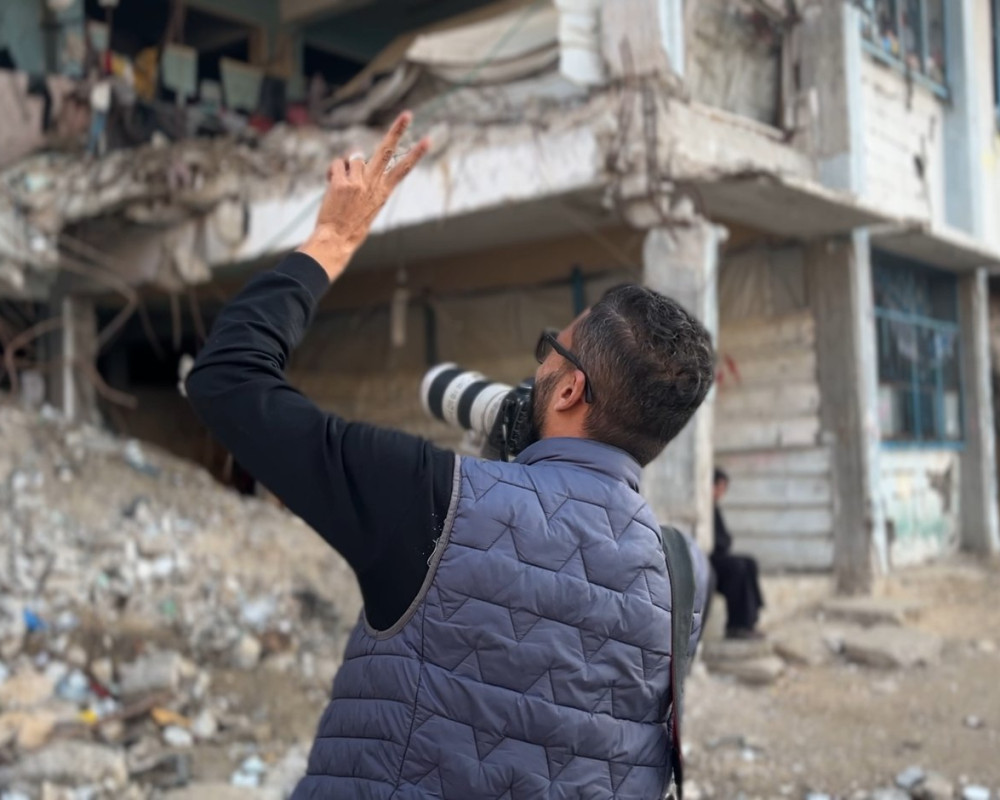
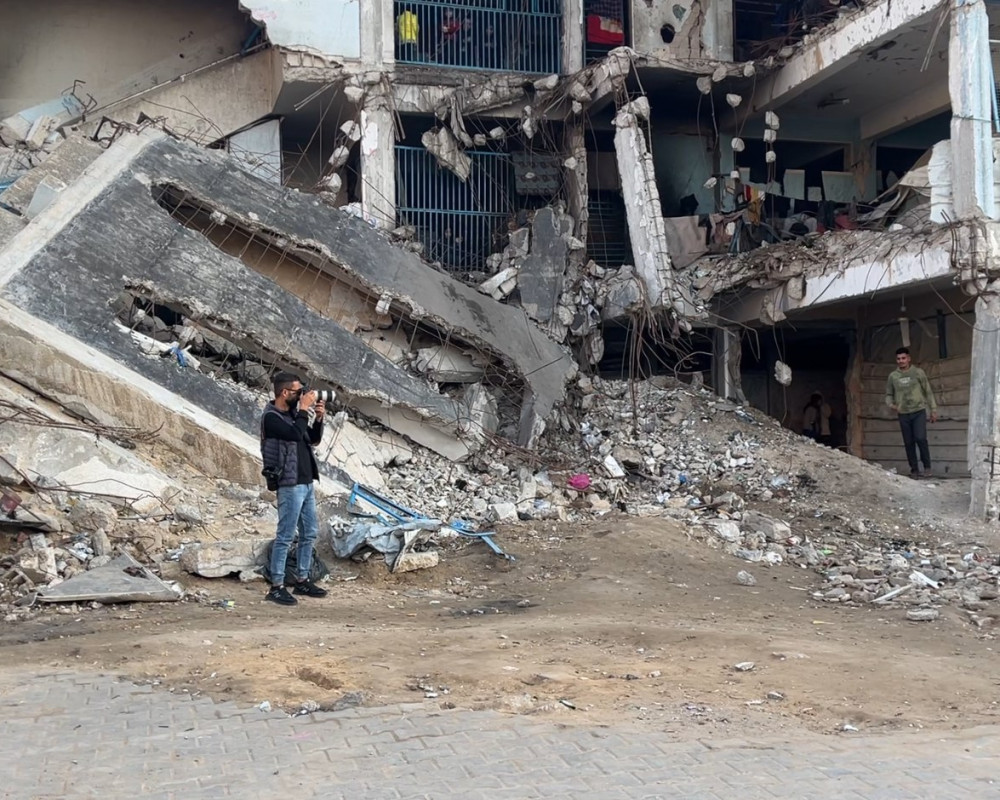
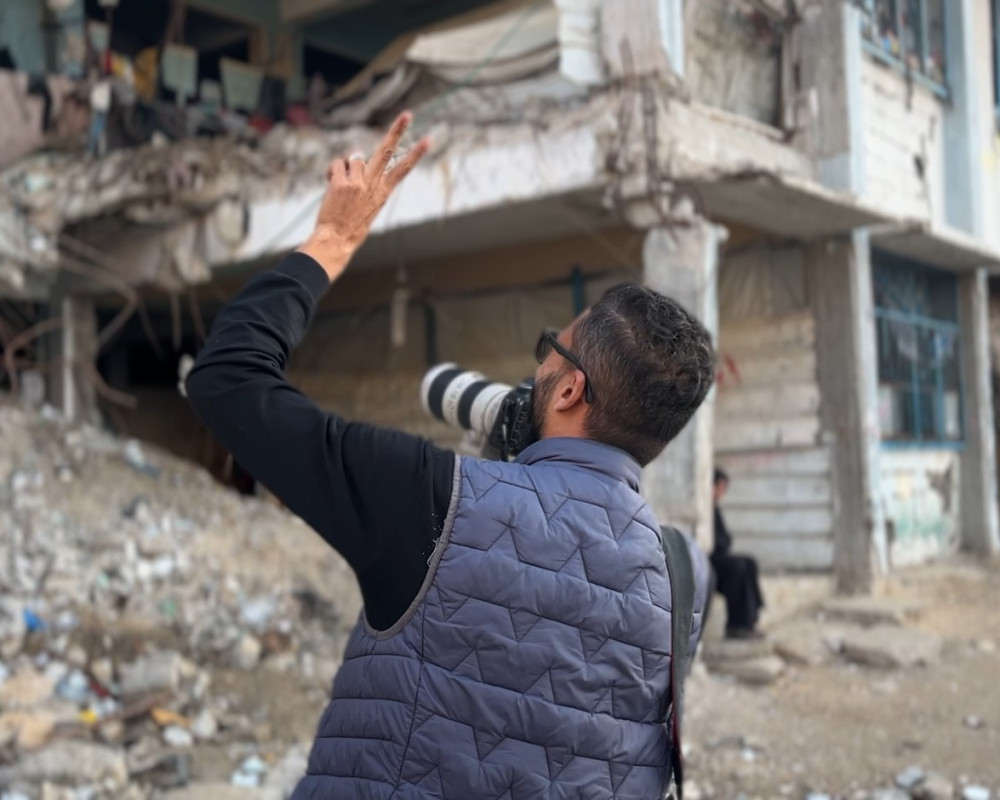
Moaz Al-Salhi: Photojournalist Documents War and Resilience Amid Personal Struggles
Moaz Al-Salhi, a photojournalist from the Bureij refugee camp in Gaza, has spent years covering the Israeli Palestinian conflicts, capturing the destruction and human suffering that are part of daily life in the besieged territory.
His journalistic career began during the 2012 escalation and continued through the 2014 war and subsequent conflicts, each leaving a profound impact on the fragile Gaza Strip and leaving lasting emotional and psychological scars on Al-Salhi himself.
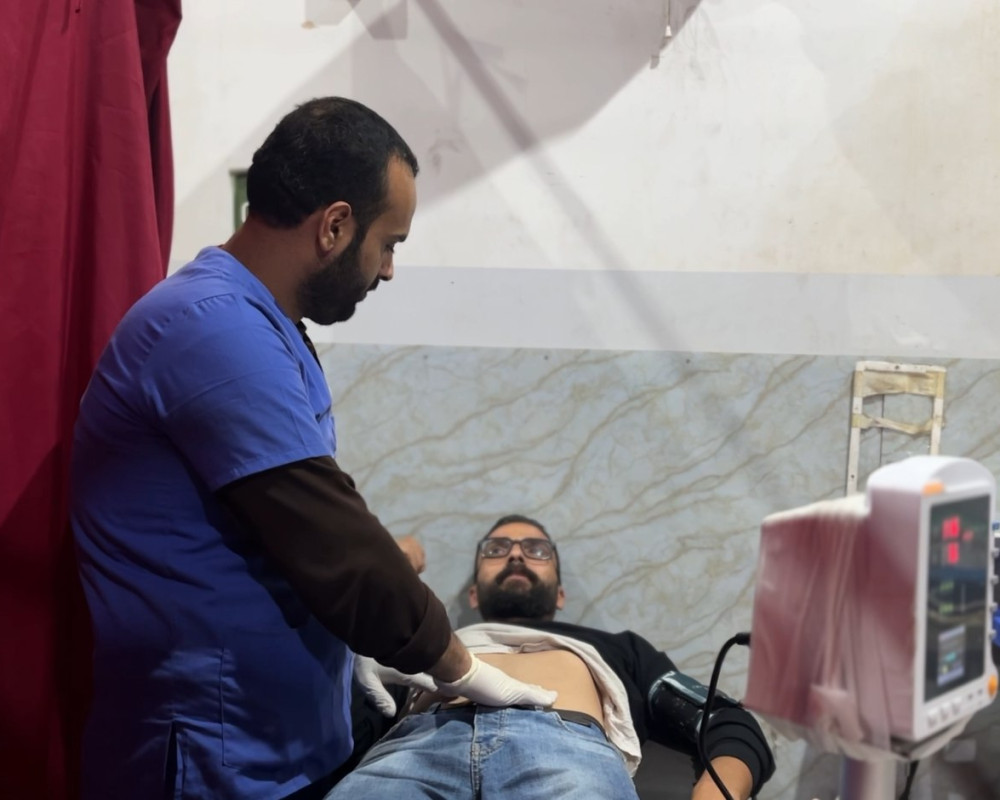
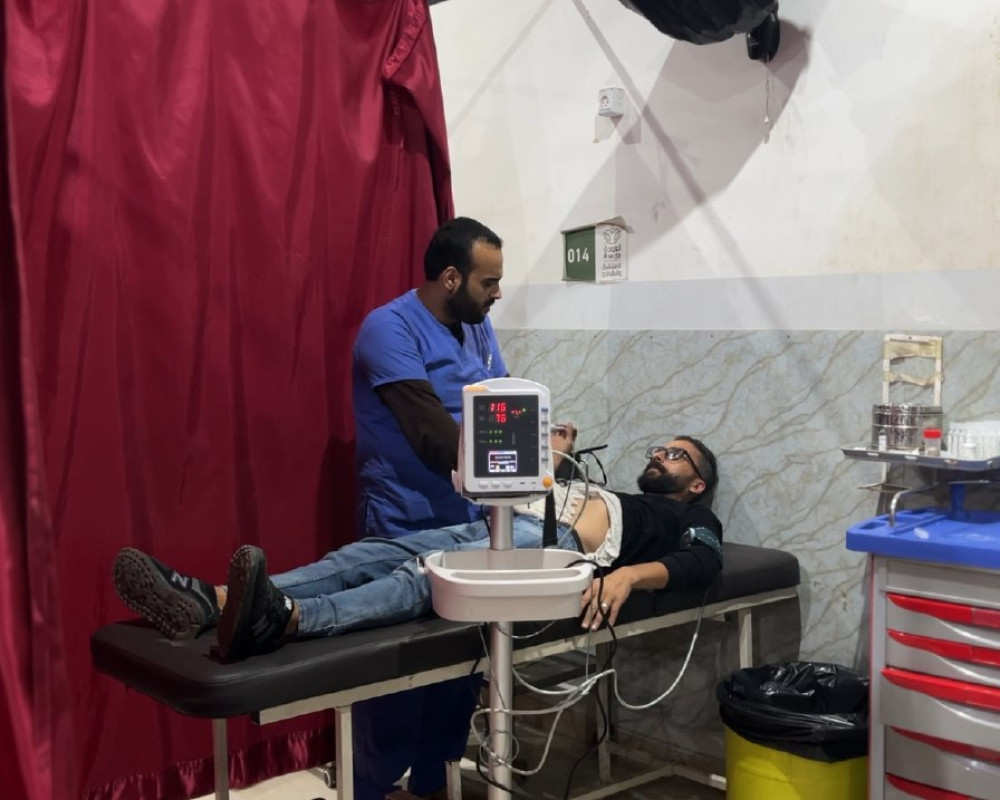
Despite his professional dedication, Al-Salhi faces a serious personal challenge. In 2022, doctors diagnosed him with a chronic cancer called Bruns disease, which affects the entire digestive system and requires specialized treatment.
Al-Salhi said, “My first treatment session was scheduled for 8 October 2023 at a hospital in Israel, but the war prevented me from going.”
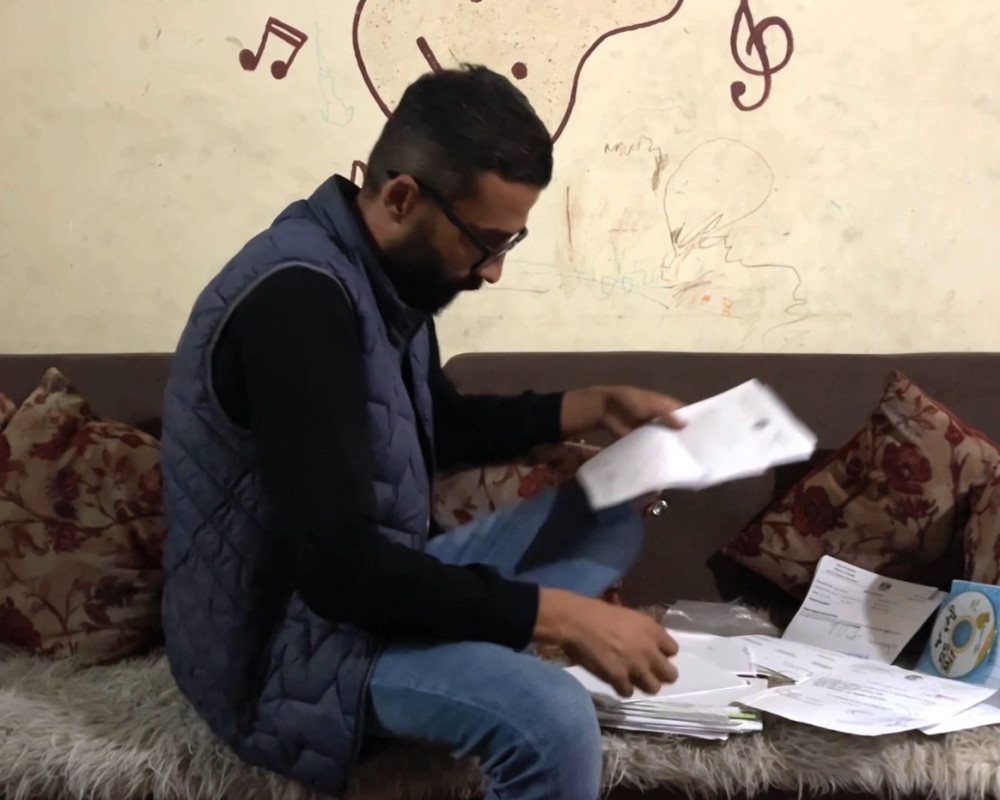
Even as his health deteriorated, he continued covering events, at times carrying his treatment IV while photographing frontline scenes, he told a PNN reporter in Gaza.
Speaking about his own condition and the situation for patients with serious chronic illnesses in Gaza, Al-Salhi added: “I have seen cases far worse than mine. What I want people to understand, especially our community in Gaza, is that despite the pain, disease, and blockade, we continue to live, reconcile with ourselves first and then with each other, and believe there is life worth living here.” He extends this message to the wider world, affirming that resilience and hope exist even in the harshest conditions.
After returning from the field, Al-Salhi sits with hospital reports and medical files regarding his condition, hopeful that international and humanitarian institutions in journalism and healthcare will provide him and other patients the opportunity to receive proper treatment.
During his work, Al-Salhi has witnessed extreme hardship and injustice, and these scenes have sometimes become historic moments for him. He recalls working alongside colleagues to provide humanitarian assistance—putting cameras aside to help doctors and nurses treat dozens of casualties from airstrikes on a café, believing in the importance of life and humanity.
Gaza has long been one of the world’s most dangerous places for journalists. The recent devastating war has killed at least 250 media workers since 2023, while dozens more have been injured or forced to suspend reporting temporarily.
Al-Salhi faces dangerous working conditions on the frontlines, navigating bombings and chaos with his equipment and minimal protection, often lacking basic necessities, yet he continues documenting life in Gaza.
His work exemplifies courage and dedication. In collaboration with Anadolu Agency, Al-Salhi has covered wars and daily struggles, capturing images that tell stories of survival, loss, and hope.
Outside his professional life, he dreams of a normal life with his children. He said, “There is hope to travel for treatment, continue my work, and live with my children. We keep dreaming that tomorrow, God willing, will be a better day.”
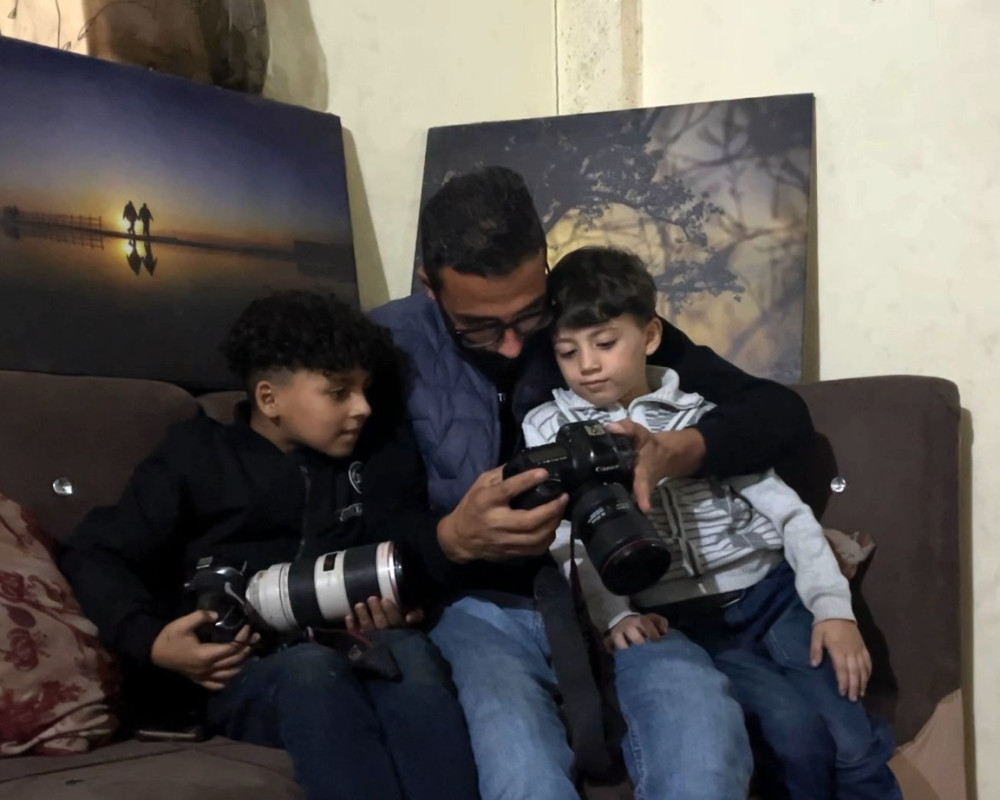
In his free time, Al-Salhi sits with his children, teaching them about photography and reviewing his images with them, believing in the importance of passing on journalistic knowledge to the next generation.
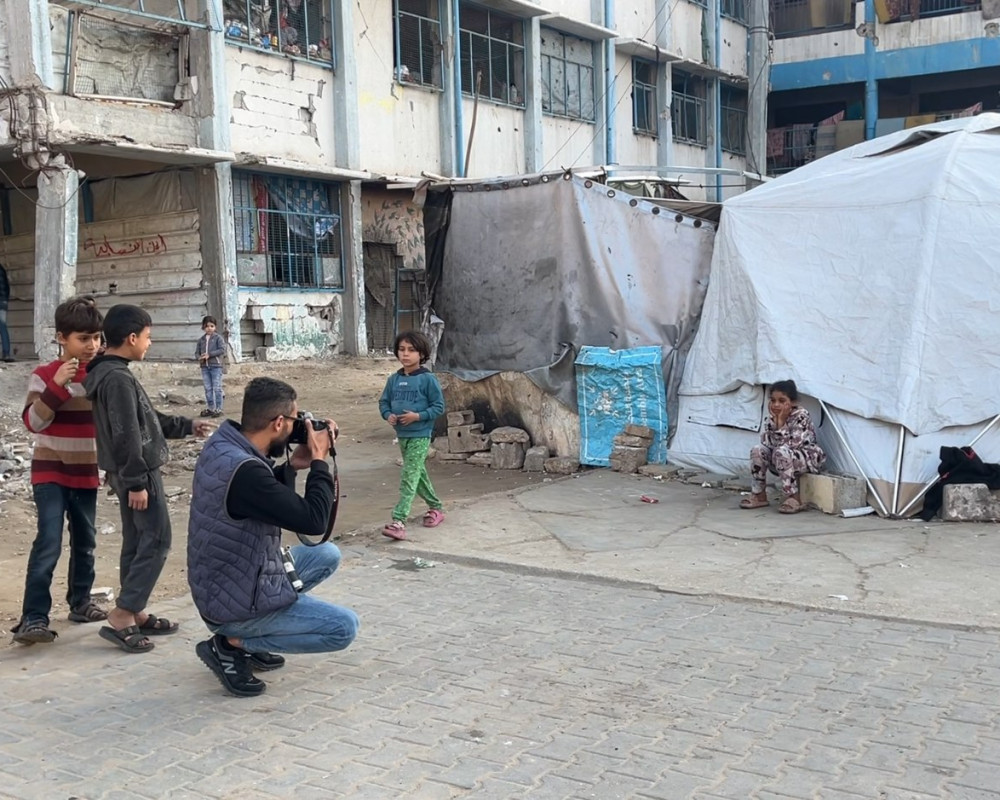
Despite ongoing dangers—even after announcements of ceasefires that were not fully enforced—he sometimes roams through rubble and destroyed buildings, interacting with children and adults, photographing resilience and life in Gaza, hoping to awaken the world, convinced that a single image can speak louder than thousands of words.
Many media workers in Gaza, like Al-Salhi, face psychological trauma, lack of medical support, and constant threats of detention or harassment. Despite these risks, journalists continue to document reality, providing the world with critical information from the heart of Gaza. Their work underscores the courage and resilience required to report from one of the planet’s most volatile regions.
Al-Salhi’s story is a testament to personal resilience and to the courage of journalists in Gaza, who risk their lives to report from one of the most unstable areas on Earth.
This story was produced under the Qarib programme, implemented by the French Media Development Agency (CFI) in partnership with and funded by the French Agency for International Cooperation (AFD).


MARKETS EUROPE/DAX is up slightly at target level #MARKETS #EUROPEDAX #slightly #target #level

Nuggets’ Nikola Jokic prepares for MRI after injuring knee in Miami #Nuggets #Nikola #Jokic #prepares #MRI #injuring #knee #Miami

Russia accuses Ukraine of attacking Putin’s residence with drones; Kyiv denies allegations #Russia #accuses #Ukraine #attacking #Putins #residence #drones #Kyiv #denies #allegations

How an armed plot against Manchester’s Jewish community was stopped #armed #plot #Manchesters #Jewish #community #stopped

Tragedy as man dies at Asda branch in England | United Kingdom | News #Tragedy #man #dies #Asda #branch #England #United #Kingdom #News

Bus accident in Chitradurga: Complete list of passengers on board Seabird coach | News from India #Bus #accident #Chitradurga #Complete #list #passengers #board #Seabird #coach #News #India
-

 News & Knowledge / Facts2 days ago
Tango is sad: singer “Chiqui” Pereyra has died #Tango #sad #singer #Chiqui #Pereyra #died
-

 News & Knowledge / Facts3 days ago
Rayan Cherki scores crucial late victory for Manchester City at Nottingham Forest #Rayan #Cherki #scores #crucial #late #victory #Manchester #City #Nottingham #Forest
-

 Ireland2 days ago
RIP: Christmas tragedy as two elderly men die following fire at rural Sligo house #RIP #Christmas #tragedy #elderly #men #die #fire #rural #Sligo #house
-

 News & Knowledge / Facts4 days ago
China sanctions 30 US companies and individuals for arms sales to Taiwan | Gun News #China #sanctions #companies #individuals #arms #sales #Taiwan #Gun #News
-
 News & Knowledge / Facts3 days ago
Russian drones and missiles bomb Ukraine ahead of Zelensky-Trump meeting #Russian #drones #missiles #bomb #Ukraine #ahead #ZelenskyTrump #meeting
-

 Ireland4 days ago
Raw revelations from within the royal family in the 1995 State Papers #Raw #revelations #royal #family #State #Papers
-

 News & Knowledge / Facts4 days ago
CAN: Salah’s penalty sinks South Africa #Salahs #penalty #sinks #South #Africa
-
 News & Knowledge / Facts3 days ago
Russia targets kyiv with missiles ahead of Ukraine-US meeting #Russia #targets #kyiv #missiles #ahead #UkraineUS #meeting