News & Knowledge / Facts
End of precious metals rally? : The money is again driven into the ground without being sharpened #precious #metals #rally #money #driven #ground #sharpened


It is precisely these developments that make the stock market so attractive. Because in 2026, everything risks happening differently than expected. While many analysts expect prices to continue to rise, a central question arises: what will be the real surprises in the coming year and how can you take advantage of them?
Our current special report highlights five developments that almost no one expects, but which have enormous return potential. From the return of oil stocks to undervalued rig stocks to the possible changing of the guard in the AI sector: if you want to perform above average in 2026, you need to think counter-cyclically and take a position early.
In the free report, we present 5 stocks that could be at the center of such turning points in 2026. Solidly valued, well positioned and with surprisingly strong momentum.
Download now for free! Before others realize where the opportunities really lie!
This exclusive PDF is only available for a limited time.
Source link
#precious #metals #rally #money #driven #ground #sharpened


Tell us again how your ice agents are not terrorizing American citizens
#ice #agents #terrorizing #American #citizens..
News & Knowledge / Facts
Flu cases are increasing in the United States. Here’s where it happens. #Flu #cases #increasing #United #States #Heres
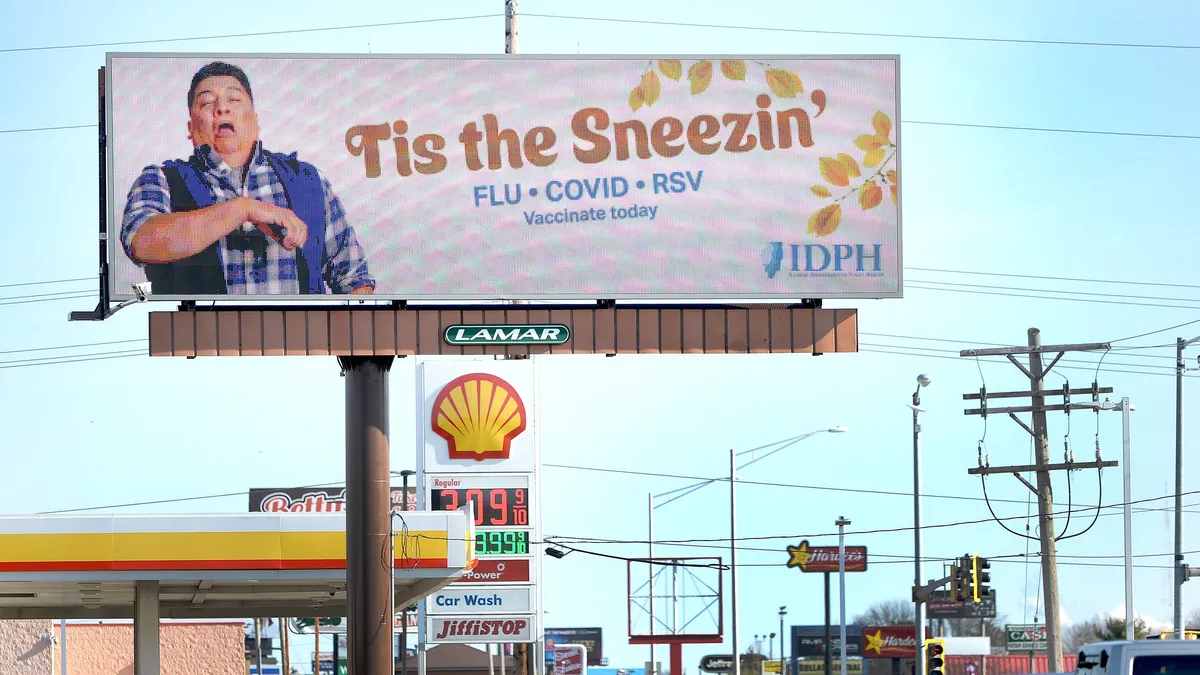
A new flu variant is sweeping the United States, causing millions of reported cases and doubling the number of hospitalizations, a surge that doctors say may not stop for weeks.
Influenza activity is at “high” or “very high” levels in 32 states and jurisdictions, according to the Dec. 30 report from the Centers for Disease Control and Prevention. This is an increase from the 17 states reported the previous week. Since the start of the flu season in October, at least 7.5 million people have contracted the disease.
Hospitalizations nearly doubled in just one week, rising to 19,053 from 9,944 the week before, according to CDC data. Around 3,100 deaths have been reported. Additionally, the number of pediatric deaths increased to five, up from two the previous week.
Influenza A(H3N2) viruses are the most frequently reported influenza viruses this season.
States with the highest flu activity include Colorado, Louisiana, South Carolina, New Jersey and New York, according to the CDC.
What is the new strain of flu?
Subclade K (formerly called A(H3N2) virus subclade J.2.4.1) is a mutation of the influenza A H3N2 virus. Influenza A is usually the virus associated with the term “flu” and has evolved into many different strains over time.
Each year, the seasonal flu vaccine is formulated to target the most common strains. One of them, H3N2, has been around for decades, according to the CDC and the Gavi Vaccine Alliance, but its most recent mutation is different enough that the vaccine designed to target H3N2 for the 2025-2026 season is not as effective against it.
Because it is structurally different, the K subclade may also be more effective at dodging immune systems that have already evolved protections against more familiar strains. This year’s vaccine is not useless against the K subclade, however.
Preliminary data showed the vaccine still provides protection and rates of hospitalization and serious illness are comparable to last year in Europe, according to the Pan American Health Organization and a study published in the medical journal Eurosurveillance.
Know the symptoms of the flu
Doctors and health care professionals recommend that everyone aged 6 months and older get a flu vaccine during flu season because symptoms overlap with those of COVID-19. Your immune system can be weakened by an infection, making you more vulnerable to others.
The flu and COVID-19 have several symptoms in common. Here’s how to distinguish the two viruses:
How to protect yourself from the flu
It’s not too late to get your flu shot. The CDC, World Health Organization, and other leading medical institutions consider it to be the most effective way to prevent serious illness from the flu. Everyone aged 6 months and older is eligible for the flu vaccine unless they have a specific health problem, such as an allergy to its ingredients or a history of serious reaction to the vaccine.
Six habits to stay healthy during flu season
- Wash your hands frequently with soap and water. Scrub for 20 seconds to kill germs.
- Get your flu vaccine; it’s not too late.
- Cover your mouth and nose with a tissue, not your hands, when you sneeze or cough.
- If you feel symptoms developing, do not go to work or school. This will prevent spreading the disease to others.
- Avoid touching your eyes, nose and mouth. If you touch something that is contaminated with germs, it can easily spread disease.
- Clean and disinfect your home frequently, especially high-touch surfaces like doorknobs and counters.
Contributors: Mike Snider, Mary Walrath-Holdridge
SOURCE USA TODAY Network Reporting and Research; Centers for Disease Control and Prevention
Source link
#Flu #cases #increasing #United #States #Heres
News & Knowledge / Facts
Atomic clocks control our lives: that’s why there are detonations everywhere at the same time on New Year’s Eve #Atomic #clocks #control #lives #detonations #time #Years #Eve


Keystone
Without precise time, the modern world is collapsing – from GPS to the power grid. And Switzerland is one of the pioneers of this invisible order.
No time? blue News summarizes for you
- The exact time of midnight is determined by UTC universal time, which is based on measurements from many atomic clocks around the world.
- Atomic clocks are essential to our digital infrastructure because they provide highly precise time, necessary for GPS, power grids, mobile communications and the Internet, among other things.
- Switzerland plays a key role in atomic clock technology.
When the last seconds are counted down on New Year’s Eve, millions of people count on the clock on their cell phone, on their television or the clock in their church steeple. They all count together – five, four, three, two, one. But who really decides when exactly midnight is?
The answer leads to a world that almost no one knows about – and without which our modern daily life would immediately collapse.
Who decides when exactly midnight is?
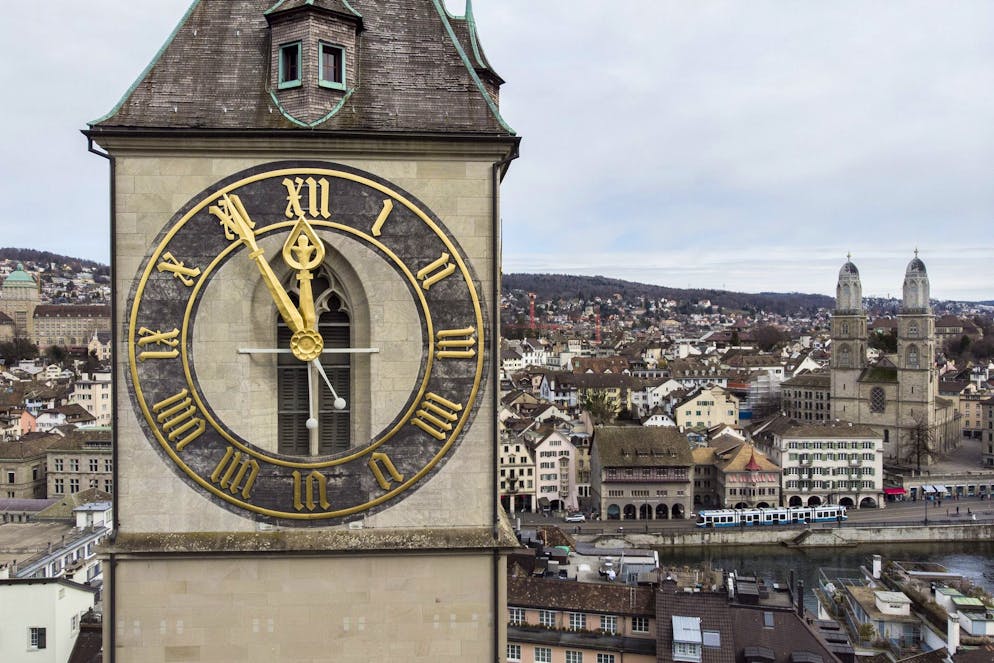
Midnight is not about emotion. Nor is it determined by a single clock. The official world time is called UTC – Universal Time Cooperative. This time results from a global interaction of hundreds of high-precision atomic clocks, distributed in specialized laboratories around the world.
Your data circulates together at the BIPM (International Bureau of Weights and Measures) in Paris. A single bond time is calculated from all measurements. “It’s the benchmark that the whole world follows,” Steve Lecomte, member of the management team of the Swiss CSEM research center and head of the instrumentation sector, tells blue News. CSEM is active in the fields of micromanufacturing, digitalization and renewable energies, with its headquarters in Neuchâtel.
Switzerland is also part of this network: Metas, the Federal Metrology Institute in Bern, supplies temporal data to Paris. Swiss time is also directly integrated with world time.
Why is the notion of time no longer enough today?
In the past, it was enough to look at the sun. Later on a mechanical watch. Today, that is no longer enough. The reason: our world is highly connected, digital and automated. Billions of processes are running simultaneously – and they need to be perfectly synchronous.
Quartz watches, like those found in wristwatches, are practical but not perfect. “A quartz vibrates freely,” explains Lecomte. Temperature, pressure or magnetic fields can modify its frequency and thus distort time.
Keystone
Atomic clocks get around this problem. They use atoms – often cesium – as a clock. These atoms always vibrate in the same way. Everywhere. “An atom is a universal reference. A hydrogen atom behaves the same way on Earth as it does on the other side of the universe,” explains Lecomte. This makes atomic clocks extremely stable.
One second too late – what would really happen?
A second seems trivial. In the world of high technology, this is gigantic. This is particularly evident with GPS.
Satellite navigation works by receiving signals from multiple satellites. The position is calculated from the transit time of these signals. Each satellite broadcasts its exact position and current high-precision GPS time based on atomic clocks. The receiver measures the signal travel time. Multiplied by the speed of light, this gives the distance to the satellite.
But light is fast: around 300,000 kilometers per second. Lecomte calculates: “In a nanosecond (a billionth of a second, editor’s note) The light travels about 30 centimeters. In order to be able to measure our position with an accuracy of about one meter, we need to determine the time with an accuracy of at least three nanoseconds.
This means: Even a small time error results in a position error. If the time was slightly wrong, your smartphone would suddenly point you down the wrong street – or hundreds of meters away.
And GPS is just one example. Mobile networks, internet nodes and power grids also depend on the exact time.
What do electricity, the Internet and mobile communications have to do with time?
Electricity networks operate at a fixed frequency – in Europe 50 Hertz. This frequency must be synchronous everywhere. “If two waves are not synchronized, they cancel each other out,” explains Lecomte. Result: instability, breakdowns – in the worst case, damage or power outages.
Mobile networks work the same way. Thousands of antennas send and receive data. Without a common time base, data packets would collide. Videos stutter, phone calls drop, networks crash – especially during busy times like New Year’s Eve.
This is why mobile phone stations use time references from satellites and also protect themselves with local atomic clocks in the event of a satellite signal failure.
Data centers and cloud systems also need accurate time. Data is processed, compared and stored at the same time. Without precise synchronization, chaos reigns.
The key role of silent Switzerland
Although the market for atomic clocks is small, they are of extremely strategic importance. And this is precisely where Switzerland plays a central role.
A unique ecosystem has developed over the decades in Neuchâtel: universities, high-tech companies and research centers like CSEM work in close collaboration. Atomic clocks for telecommunications, satellites, navigation, military and science are created here.
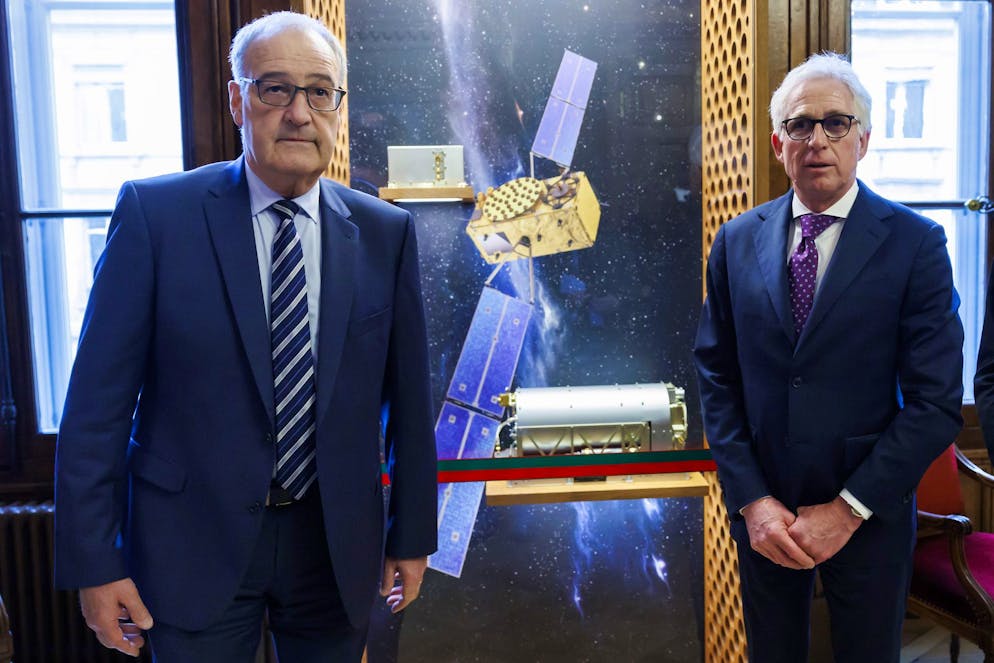
“Certain atomic clocks on the Galileo satellites come from Neuchâtel,” explains Lecomte. Galileo is the European civil global satellite navigation system allowing very precise positioning and synchronization. Swiss atomic clocks have also been involved in historic projects, for example in synchronizing telescopes that made the first image of a black hole possible.
Keystone
Switzerland’s political neutrality is an advantage. “Time is a strategic technology,” explains Lecomte. Countries want to remain independent. “China, for example, is reluctant to buy atomic clocks from the United States. » Swiss solutions, on the other hand, enjoy great confidence throughout the world.
Do we notice any of this in everyday life?
Actually no. And that’s exactly what’s amazing. As long as everything works, we don’t notice how precisely time is measured. We browse, stream, make phone calls, pay – without thinking about it.
But if there was no time, chaos would be immediate. This is not a gradual effect, but a sudden collapse of digital systems. “Without atomic clocks, our current networked world would not be possible,” says Lecomte.
Will time become even more important in the future?
“Yes,” replies Steve Lecomte. Artificial intelligence, autonomous vehicles and decentralized energy systems require perfect timing. The reason: “Machines must make decisions simultaneously, compare data in real time and maintain the stability of networks,” explains Lecomte.
Keystone
Where can I check the time on New Year’s Eve?
To toast at exactly the right time, you’ll probably need an atomic clock at home. But don’t worry: our smartphones are also extremely accurate. They continuously synchronize with official atomic clocks via the Internet (NTP server) or mobile networks (GPS signals), so deviations are only on the order of fractions of a second and are usually not noticed.
Even an atomic clock expert doesn’t think about nanoseconds at the end of the year: “Until now, I never needed an atomic clock to celebrate the New Year,” says Lecomte. And us, the laity? Like every year, we count down and make a toast. But it’s good to know that in the background, the most precise clocks in the world are ensuring that midnight is indeed midnight.
Source link
#Atomic #clocks #control #lives #detonations #time #Years #Eve

Tell us again how your ice agents are not terrorizing American citizens…

Flu cases are increasing in the United States. Here’s where it happens. #Flu #cases #increasing #United #States #Heres

Atomic clocks control our lives: that’s why there are detonations everywhere at the same time on New Year’s Eve #Atomic #clocks #control #lives #detonations #time #Years #Eve

Bus accident in Chitradurga: Complete list of passengers on board Seabird coach | News from India #Bus #accident #Chitradurga #Complete #list #passengers #board #Seabird #coach #News #India

Investigations underway after man dies in e-scooter crash in Waterford City #Investigations #underway #man #dies #escooter #crash #Waterford #City

How to Evereve Style Real Women: Favorite Influencer Looks to Try #Evereve #Style #Real #Women #Favorite #Influencer
-

 News & Knowledge / Facts3 days ago
Tango is sad: singer “Chiqui” Pereyra has died #Tango #sad #singer #Chiqui #Pereyra #died
-

 Ireland3 days ago
RIP: Christmas tragedy as two elderly men die following fire at rural Sligo house #RIP #Christmas #tragedy #elderly #men #die #fire #rural #Sligo #house
-

 News & Knowledge / Facts4 days ago
Rayan Cherki scores crucial late victory for Manchester City at Nottingham Forest #Rayan #Cherki #scores #crucial #late #victory #Manchester #City #Nottingham #Forest
-
 News & Knowledge / Facts4 days ago
Prisoner on the run in UK after fleeing on Christmas Day #Prisoner #run #fleeing #Christmas #Day
-

 News & Knowledge / Facts3 days ago
New York covered in snow, causing travel chaos #York #covered #snow #causing #travel #chaos
-

 News & Knowledge / Facts3 days ago
Brigitte Bardot is considered the “angel of animals” by the founder of Peta #Brigitte #Bardot #considered #angel #animals #founder #Peta
-

 News & Knowledge / Facts3 days ago
Zelensky to meet Trump as efforts to end Russia-Ukraine war remain elusive #Zelensky #meet #Trump #efforts #RussiaUkraine #war #remain #elusive
-
 Ireland3 days ago
Cutting-edge research into ‘mini-brains’ at the University of Galway #Cuttingedge #research #minibrains #University #Galway