
United States
Tell us again how your ice agents are not terrorizing American citizens…

News & Knowledge / Facts
China announces that it has “successfully completed” Taiwan’s military maneuvers #China #announces #successfully #completed #Taiwans #military #maneuvers
Beijing
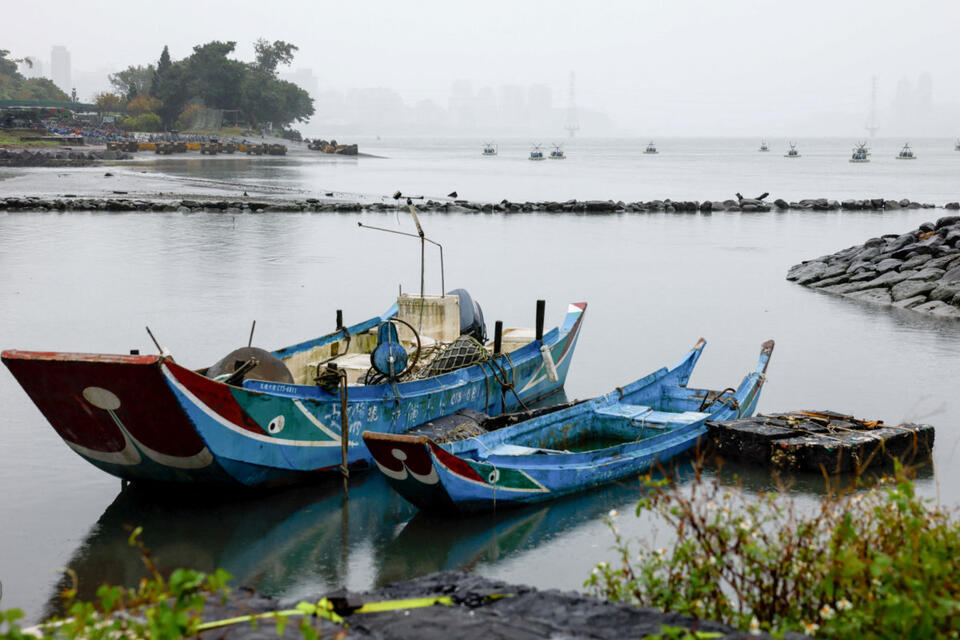
In a statement released on New Year’s Eve, the PLA said the operation it dubbed “Mission Justice 2025” had “fully tested the integrated joint operations capabilities of its troops.”
“Always on high alert, troops of the theater command will continue to strengthen their combat readiness through intensive training, resolutely thwart attempts by Taiwan independence separatists and any external intervention, and firmly safeguard the sovereignty and territorial integrity of the state,” said Capt. Li Xi, spokesperson for the PLA Eastern Theater Command.
The brief announcement, presented on video accompanied by upbeat martial music, offered no details about what constituted success, nor did it specify exactly when the exercises ended. An earlier announcement had said they would take place throughout the day on Monday and Tuesday, but it was unclear whether persistent drills continued into Wednesday around Taiwan.
There are many sensitivities in Taiwan
Taiwan has long been China’s most sensitive issue in the eyes of the international community.
Beijing has long insisted the island is its sovereign territory and has promised to retake it by force if necessary. The autonomous island separated from the mainland in 1949 after Chiang Kai-shek’s Nationalists withdrew after losing the civil war to Mao Zedong’s Communists. This communist government has ruled the rest of China ever since.
Beijing sends warplanes and warships to the island almost daily, and in recent years it has stepped up the scope and scale of the exercises.
Chinese President Xi Jinping also spoke Wednesday, albeit indirectly, briefly referring to the situation in Taiwan in his annual New Year’s Eve address to the nation. He said Chinese people on both sides of the Taiwan Strait share “a bond of blood and kinship.”
“The reunification of our motherland, a trend of the times, is unstoppable,” Xi said.
This week’s military maneuvers were greeted in many corners as inflammatory, and China itself acknowledged that they were designed to send a message to “external forces” — in short, to anyone who might come between its government and the island it cherishes.
The exercises were received critically
He has certain goals in mind in this regard. In November, the prime minister of Japan – a country that has a checkered history with China after brutally colonizing parts of it in the early 20th century – said she would not rule out military intervention if Taiwan faced a direct attack from the PLA.
Japan’s Foreign Ministry said Wednesday that China’s military exercises around Taiwan constitute “an act that exacerbates tensions across the Taiwan Strait” and expressed concerns to Beijing.
“Japan hopes that issues concerning Taiwan will be resolved peacefully through dialogue, a position that the Japanese government has always maintained,” he said in a statement. “Peace and stability across the Taiwan Strait are important to the entire international community. Japan continues to follow developments with keen interest.”
And in mid-December, the United States announced a package of arms sales to Taiwan that, if approved by Congress, would represent the largest such aid ever given to the island — a move sharply criticized by China.
In the Philippines, which has intermittent disputes with China over other territories in the South China Sea, Defense Secretary Gilberto C. Teodoro Jr. said he was “deeply concerned about Chinese military and coast guard actions around Taiwan,” saying they undermine stability “in an already fragile geopolitical environment.”
“This increased scale of coercion has implications that extend beyond cross-Strait relations and into the broader Indo-Pacific community,” Teodoro said. “Fundamental principles of restraint must be respected.”
Earlier this week, US President Donald Trump said he was not worried because he has good relations with Xi and China “has been conducting naval exercises for 20 years in this region”.
Associated Press journalists Jim Gomez in Manila, Mari Yamaguchi in Tokyo and Simina Mistreanu in Beijing contributed.
Source link
#China #announces #successfully #completed #Taiwans #military #maneuvers
News & Knowledge / Facts
U.S. jobless claims fell below 200,000 last week, with layoffs at historic lows #U.S #jobless #claims #fell #week #layoffs #historic #lows

WASHINGTON – Fewer Americans filed for unemployment benefits last week, as layoffs remained low despite a weak job market.
U.S. unemployment claims for the week ending Dec. 27 fell 16,000 to 199,000 from 215,000 the previous week, the Labor Department reported Wednesday. Analysts surveyed by data firm FactSet forecast 208,000 new apps.
Claims for unemployment benefits are often skewed during shortened vacation weeks. The shorter week may cause some people who have lost their jobs to delay filing their applications.
The weekly report was released a day early due to the New Year holiday.
Applications for unemployment aid are considered a proxy for layoffs and are close to a real-time indicator of the health of the labor market.
Earlier this month, the government announced that the United States gained 64,000 jobs in November, but lost 105,000 in October, as federal workers left following the Trump administration’s budget cuts. This helped push the unemployment rate to 4.6% last month, the highest since 2021.
October’s job losses were caused by a drop of 162,000 federal employees, many of whom resigned at the end of the 2025 fiscal year on September 30 under pressure from billionaire Elon Musk’s U.S. government pay purge.
The Labor Department’s revisions also cut 33,000 jobs from the August and September payrolls.
Recent government data revealed a labor market in which hiring has clearly lost momentum, hampered by uncertainty over President Donald Trump’s tariffs and the lingering effects of high interest rates the Fed has implemented in 2022 and 2023 to curb a pandemic-induced burst of inflation. Since March, job creation has fallen to an average of 35,000 per month, compared to 71,000 for the year ended in March.
Earlier this month, the Federal Reserve cut its benchmark rate by a quarter point, its third consecutive cut.
Fed Chairman Jerome Powell said the committee reduced borrowing costs out of concern that the labor market may be even weaker than it appears. Powell said recent employment numbers could be revised down by as much as 60,000, which would mean employers have actually cut an average of about 25,000 jobs per month since the spring.
Companies that recently announced job cuts include UPS, General Motors, Amazon and Verizon.
The Labor Department’s report released Wednesday also showed that the four-week average of claims, which smooths out some of the weekly volatility, increased by 1,750 to 218,7500.
The total number of Americans filing for unemployment benefits for the previous week ending Dec. 20 fell by 47,000 to 1.87 million, the government said.
Copyright 2025 The Associated Press. All rights reserved. This material may not be published, broadcast, rewritten or redistributed without permission.
Source link
#U.S #jobless #claims #fell #week #layoffs #historic #lows
News & Knowledge / Facts
Trump’s TACO tariff parade: Here are all the times he talked a big game and didn’t back it on trade #Trumps #TACO #tariff #parade #times #talked #big #game #didnt #trade
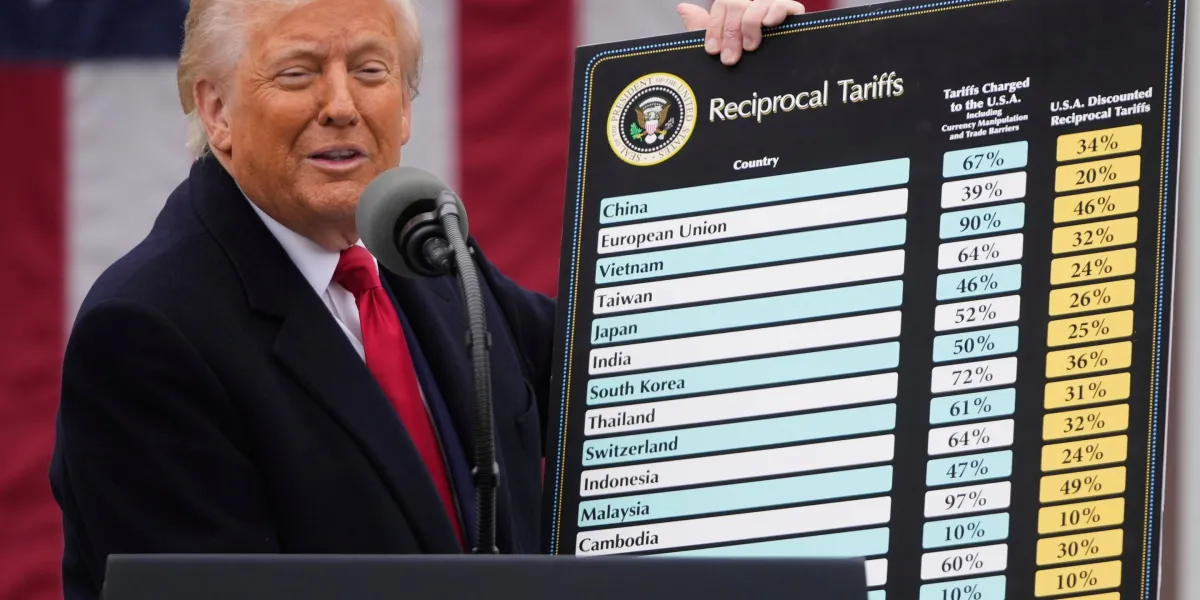
President Donald Trump has made numerous tariff threats and trade promises this year. Many of them came in the form of a series of new import taxes that upended decades of U.S. economic policy – but others have yet to be implemented as 2025 draws to a close.
Some of Trump’s unrealized threats reflect a broader approach by a president with a history of using exorbitant levies to pressure other countries into new trade deals, one-off retaliations or even to punish political critics. At the same time, they came as a growing list of tariffs took effect — from Trump’s punitive new taxes on imported metals to quid pro quo levies with major U.S. trading partners like China — plunging consumers and businesses around the world into uncertainty.
Here’s what Trump said in announcing some of his biggest (but still unfulfilled) tariff threats and promises this year, and where things stand today.
External Revenue Service
In his words:
What happened: At the end of December, the Foreign Revenue Service had not yet been created. While administration officials have continued to reiterate plans to launch the Foreign Revenue Service during the first months of Trump’s return to office, the entity does not yet exist.
200% tariff on European wines, champagnes and spirits
In his words:
What happened: The EU’s proposed levy on American whiskey — which it unveiled as part of a broader retaliation in response to Trump’s new steel and aluminum tariffs — was postponed, with the latest delay expected to run until at least February.
Trump’s threat of 200% tariffs on European alcohol never materialized. But spirits were not included in the EU-US trade deal reached over the summer, which set a 15% rate on most European imports.
100% rate on films made abroad
In his words:
What happened: Despite Trump’s repeated threats, the United States has yet to impose 100% tariffs on foreign films. After its initial promise in May to begin the process, the White House said no final decision had been made. It’s also still unclear how the United States would tax a film made abroad.
Prices on pharmaceutical drugs
In his words:
What happened: On October 1, the president did not sign an executive order imposing a 100% tariff on pharmaceuticals, and to date no levy has been implemented. But Trump previously suggested that significant levies on pharmaceutical drugs could come later, telling CNBC in August that he would start by imposing a “small tariff” and potentially raise the rate up to 250%. At the same time, trade deals with specific countries set their own rates or exemptions – the UK, for example, guaranteeing a 0% tariff on all UK medicines exported to the US for three years. The administration also announced deals with specific companies promising lower drug prices.
100% tariff on computer chips
In his words:
What happened: The total ban on computer chips has not yet taken effect. When he announced his intention to impose the levy in August, Trump did not specify the timetable. And other details remained scarce.
$2,000 rate dividend
In his words:
What happened: Details on how, when and if a tariff dividend will reach Americans are still scarce. Budget experts said the math doesn’t hold up. And Treasury Secretary Scott Bessent suggested that might not mean government checks. Instead, Bessent told ABC in November, the reduction could come in the form of tax cuts. White House National Economic Council Director Kevin Hassett also told CBS News that it’s up to Congress to decide.
Source link
#Trumps #TACO #tariff #parade #times #talked #big #game #didnt #trade


China announces that it has “successfully completed” Taiwan’s military maneuvers #China #announces #successfully #completed #Taiwans #military #maneuvers

Grassmarket businesses warn of possible power outages in Hogmanay #Grassmarket #businesses #warn #power #outages #Hogmanay

Softbank provides $40 billion in backing to OpenAI, sources tell CNBC #Softbank #billion #backing #OpenAI #sources #CNBC

Bus accident in Chitradurga: Complete list of passengers on board Seabird coach | News from India #Bus #accident #Chitradurga #Complete #list #passengers #board #Seabird #coach #News #India

Investigations underway after man dies in e-scooter crash in Waterford City #Investigations #underway #man #dies #escooter #crash #Waterford #City

How to Evereve Style Real Women: Favorite Influencer Looks to Try #Evereve #Style #Real #Women #Favorite #Influencer
-

 Ireland3 days ago
RIP: Christmas tragedy as two elderly men die following fire at rural Sligo house #RIP #Christmas #tragedy #elderly #men #die #fire #rural #Sligo #house
-

 News & Knowledge / Facts3 days ago
Tango is sad: singer “Chiqui” Pereyra has died #Tango #sad #singer #Chiqui #Pereyra #died
-

 News & Knowledge / Facts4 days ago
Prisoner on the run in UK after fleeing on Christmas Day #Prisoner #run #fleeing #Christmas #Day
-

 News & Knowledge / Facts3 days ago
New York covered in snow, causing travel chaos #York #covered #snow #causing #travel #chaos
-

 News & Knowledge / Facts3 days ago
Brigitte Bardot is considered the “angel of animals” by the founder of Peta #Brigitte #Bardot #considered #angel #animals #founder #Peta
-
 News & Knowledge / Facts3 days ago
Zelensky to meet Trump as efforts to end Russia-Ukraine war remain elusive #Zelensky #meet #Trump #efforts #RussiaUkraine #war #remain #elusive
-

 Ireland3 days ago
Cutting-edge research into ‘mini-brains’ at the University of Galway #Cuttingedge #research #minibrains #University #Galway
-
 News & Knowledge / Facts2 days ago
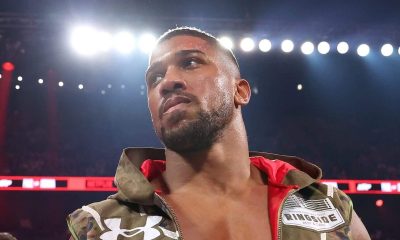
British boxer Anthony Joshua involved in car accident in Nigeria #British #boxer #Anthony #Joshua #involved #car #accident #Nigeria