










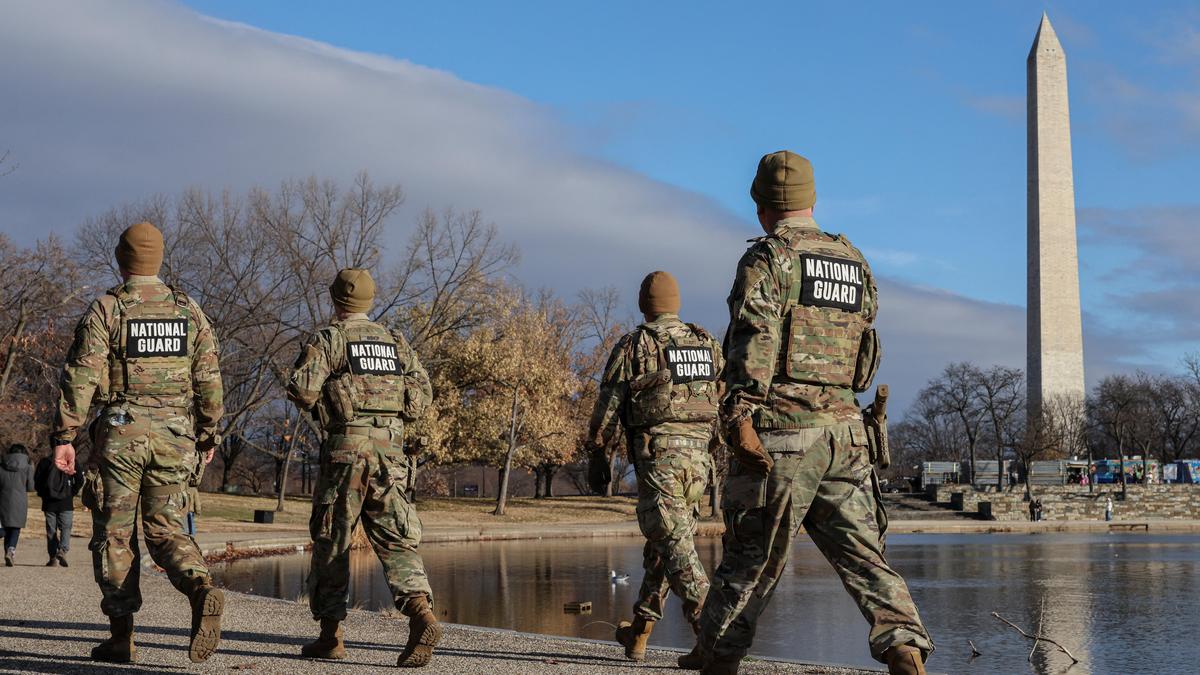

US President Donald Trump said Wednesday his administration was withdrawing the National Guard from Chicago, Los Angeles and Portland, but he added in his social media post that federal forces would “return” if crime rates rise.
Local leaders in those cities and Democrats have said the deployments, which have encountered setbacks and legal challenges, are unnecessary. They accused the Trump administration of going too far and exaggerating isolated episodes of violence to justify sending in troops.
Trump, a Republican, said deploying troops to Los Angeles, Chicago, Washington, D.C., Memphis and Portland was necessary to fight crime and protect federal property and personnel from protesters.
“We are withdrawing the National Guard from Chicago, Los Angeles, and Portland, despite the fact that CRIME has been dramatically reduced due to the presence of these great Patriots in these cities, and ONLY because of this,” Trump wrote.
“We will come back, perhaps in a much different and stronger form, when crime starts to skyrocket again – It’s only a matter of time!”
Judges overseeing lawsuits filed by cities challenging the deployments have consistently ruled that the Trump administration overstepped its authority and found there is no evidence to support claims that the troops “are necessary to protect federal property from protesters.”
On December 23, the U.S. Supreme Court blocked Trump’s attempt to deploy National Guard troops to Illinois, a decision that undermined the legal justification for sending troops to other states.
The court said the president’s power to take federal control of National Guard troops likely only applies in “exceptional” circumstances.
“At this preliminary stage, the government has failed to identify ‘a source of authority that would enable the military to execute the laws in Illinois,'” the court majority said in an unsigned order.
Local leaders who opposed Trump’s deployment of the National Guard said Wednesday that legal challenges forced him to end deployments in those cities.
“Trump’s ramblings here are the political version of ‘you can’t fire me, I’ll quit,'” California Gov. Gavin Newsom’s office said.
After Trump’s announcement, Chicago Mayor Brandon Johnson’s office shared data for 2025 on social media, saying “the city saw the fewest violent crimes in over a decade during the year, with incidents down 21.3% from 2024.”
Trump began deploying troops in June amid protests over his hardline immigration policies, including his efforts to ramp up deportations. He also deployed troops to Washington and took control of local police in response to what he called rampant crime — although local crime statistics indicate otherwise — using his unique authority as president over the U.S. capital.
Military officials have scaled back their deployments in recent months as litigation left them in limbo.
Published on January 1, 2026